Call Us for Support
+91 9654860915
Google Reviews
4.8
Call Us for Support
+91 9654860915

Sourced directly from the authorized manufacturer network to ensure authenticity and quality.
Ready to proceed? Start a request for Anrikefon on our secure patient portal to submit your prescription, upload documents and track your approval status.
Supplied with complete CDSCO-approved import and customs documentation, including Form 12A & 12B, CDEC, GST Bill of Entry, Commercial Invoice, and Packing List.
Manufacturer / Innovator:
China
Regulatory Approval:

Your Trustworthy Partner For Named Patient Program

Over a decade of trusted expertise in Named Patient Access to innovative and life-saving medicines.

100% CDSCO-compliant processes ensuring safe, ethical, and responsible medicine access.

Medicines sourced from authorized manufacturers with full batch traceability.

EU-GDP compliant warehousing for secure, quality-controlled global distribution.

Temperature-controlled logistics ensuring safe, reliable, and timely medicine delivery.
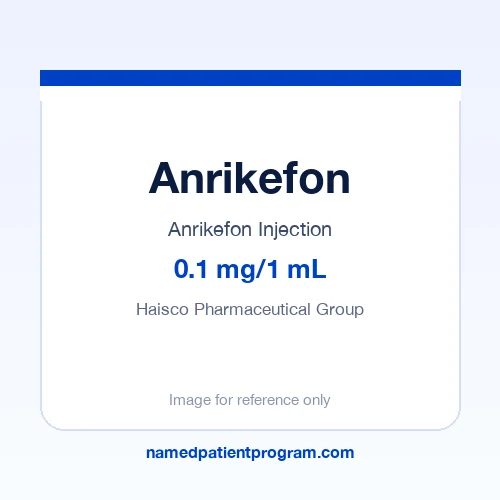
Anrikefon is a new injection that calms itch in people on kidney dialysis and also relieves pain after surgery. It was developed in China by Haisco Pharmaceutical Group and is sold there as 思舒静® (Sishujing), with the Chinese name 安瑞克芬注射液. In research it was called HSK21542.
China's National Medical Products Administration (NMPA) has approved it for two uses in adults:
It is a prescription kidney care medicine for the itch use, given by the dialysis team, and a hospital medicine for the pain use.
Anrikefon switches on kappa opioid receptors outside the brain and spinal cord. Acting there, it eases itch and relieves visceral (gut-type) pain after surgery. It is built on a small peptide core that hardly crosses into the brain: in animal tracer studies, none of it was found in the brain or spinal cord. It does not act on the mu or delta opioid receptors, which are behind the breathing problems and addiction risk of usual opioids. Because of this, it is not handled as a narcotic in China and is prescribed on an ordinary prescription.
Itch in dialysis: Haisco reports that in its phase 3 trial both the main and the secondary results were significantly better than placebo; the full numbers have not yet been published. In the earlier phase 2 trial (90 patients, published in Frontiers in Pharmacology, 2025), 62.1% of patients on the 0.3 µg/kg dose had at least a 3-point drop in itch score after 12 weeks, against 44.4% on placebo, though the main result did not reach statistical significance. The 0.3 µg/kg dose was taken forward into phase 3.
Pain after abdominal surgery: in the placebo-controlled phase 3 trial, pain relief over the first 24 hours was clearly better than placebo, and fewer patients needed a rescue painkiller (33.1% vs 46.7%). In a second trial, 24% were pain-free at 24 hours against 14% with a comparison painkiller.
Each 1 mL ampoule holds 0.1 mg. As an example, a 60 kg patient needs 60 µg (0.6 mL) for one pain dose. Your doctor sets the exact plan.
This information is not a treatment plan. For personalized medical advice, consult your doctor and refer to the full prescribing information.
In the surgery trials the Chinese label lists these common side effects (1% or more):
No grade 3 or higher side effects, no serious side effects and no withdrawals because of side effects were seen in those two studies.
In dialysis patients (phase 2 trial, 12 weeks): side effects judged related to treatment affected 16.7% in every group, including placebo. Dizziness was reported in 6.7% on the 0.3 µg/kg dose and 3.3% on placebo. High potassium was common in all groups (about 23% to 27%), as expected in dialysis. None of the serious events was linked to the medicine and there were no deaths.
Step 1 – Search & request your medicine: The patient or treating doctor submits a request with basic details to initiate the access process.
Step 2 – Verification & eligibility review: The team verifies availability and reviews eligibility against regulatory and clinical requirements to ensure a compliant pathway.
Step 3 – Receive quote & delivery timeline: A transparent quotation is shared, covering medicine cost, logistics, and a clear delivery timeline.
Step 4 – Regulatory approval process: Assistance is provided to secure the approvals and documentation required for legal cross-border access.
Step 5 – Temperature-controlled import & handling: The medicine is sourced and transported under strict GDP-compliant, cold-chain conditions to maintain product integrity.
Step 6 – Secure delivery: The medicine is delivered to the patient or treating hospital, with updates provided at each stage.
Note: From request to delivery, every step is designed to ensure your treatment reaches you safely, compliantly, and without unnecessary delays.
The injection can be imported only in the patient's name, by the patient or a government hospital, in line with India's import regulations for unapproved medicines. You will need:
Once we have received and checked a valid prescription and, where needed, an import permit.
No. It is approved only in China. It has no CDSCO approval, it is not sold in Indian pharmacies, and the US FDA and European Medicines Agency have not approved it either.
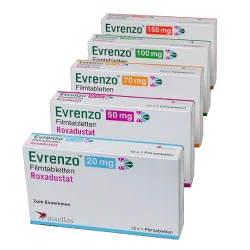
Patients can still get it legally through the Named Patient Program (NPP), which allows a medicine not registered in India to be imported for one specific patient on a prescription. For people on dialysis, our page on Evrenzo covers another imported kidney care medicine, used for anaemia in chronic kidney disease.
It can be made available to patients, doctors, and hospitals across major cities in India, including Gurgaon, Delhi, Bangalore, Mumbai, Navi Mumbai, Thane, Hyderabad, Mysore, Kerala, Chennai, Coimbatore, Madurai, Kolkata, Ahmedabad, Surat, Vadodara, Pune, Nagpur, Nashik, Jaipur, Udaipur, Lucknow, Kanpur, Gorakhpur, Chandigarh, Mohali, Faridabad, Noida, Ghaziabad, Kochi, Trivandrum, Kozhikode, Thrissur, Kannur, Mangalore, Bhubaneswar, Patna, Ranchi, Raipur, Guwahati, Visakhapatnam, Vijayawada, Goa, Jammu, Srinagar, Dehradun, Bhopal, Indore, Ludhiana, Amritsar, and others — and can facilitate delivery to the patient's treating hospital. Orders are confirmed only after receipt of a valid doctor's prescription and an import permit, where applicable.
NamedPatientProgram.com (NPP) sources this medicine through the manufacturer's authorised supply channels in China and arranges supply to patients, doctors, and hospitals under applicable legal provisions. The ampoules travel sealed in their original packs under temperature-controlled shipping and are stored as directed on the pack. Because dialysis patients need a dose after every session, we plan quantities month by month and deliver to the dialysis unit or treating hospital. All prescriptions are dispensed and checked by registered pharmacists and dispatched from New Delhi, India, after legal requirements are fulfilled.
For the current cost in India and availability, contact NPP via WhatsApp at +91 98104 69557 | Toll-Free: 1800-1200-365 or email info@namedpatientprogram.com.
Patients across India can access this medicine through regulated import pathways, with delivery arranged to the dialysis unit or treating hospital on a valid specialist's prescription.
Large dialysis centres here can request the injection for a named patient, and our New Delhi dispatch point keeps transit short.
Supply can be sent to the dialysis unit so doses are ready for each session.
Nephrologists in Bangalore can share the prescription and dialysis schedule to start the import.
We plan repeat deliveries so a patient on three sessions a week does not run short.
The quote is based on dry weight and the number of sessions, and is shared before anything is ordered.
Deliveries to Kolkata and the eastern states go to the treating hospital with full batch records.
Patients in Pune can use the same documented import route, with updates at each stage.
The treating nephrologist can send us the reports and prescription to begin.
Patients treated at hospitals in Vellore can have supply delivered directly to the dialysis unit.
Serves patients from Punjab, Haryana and Himachal Pradesh, with delivery to the treating hospital.
We coordinate delivery to public and private dialysis centres across Uttar Pradesh.
Patients across Kerala can receive the medicine at their dialysis centre in Kochi and nearby cities.
Access can also be coordinated for patients in other Indian cities, subject to a valid prescription and regulatory requirements.

Written By
Nitin GoswamiDeputy Manager – Content & Social Media, Ikris Pharma Network
Sources: NMPA • CDSCO

Last Updated: 19 October 2026
Our specialists are here to guide you through every step of the medicine access process.
Mail Us At:
info@namedpatientprogram.comContact Us:
+91 9654860915Send us a message