Call Us for Support
+91 9654860915
Google Reviews
4.8
Call Us for Support
+91 9654860915



Written By: Nitin Goswami, Senior Medical Content Writer | Medically Reviewed By: Shilpi Banerjee, Registered Pharmacist (M.Pharm)
Quick answer: Zejula (niraparib) is a once-daily PARP inhibitor tablet used as maintenance therapy after chemotherapy in ovarian, fallopian tube, or primary peritoneal cancer. It is approved for first-line maintenance in adults whose cancer is HRD-positive (a use the FDA narrowed in June 2025) and for recurrent disease in adults with a germline BRCA mutation. Your starting dose depends on your weight and platelet count. Zejula isn't yet available commercially in India, but it can be imported through a Named Patient Program with a doctor's prescription.
Last reviewed: September 24, 2026. Every figure in this guide is sourced in the References section at the end.
It's a strange thing to hear: your scans look clean, your chemotherapy worked, and your oncologist still wants to start you on another medicine. For ovarian cancer, this isn't overtreatment — it's a deliberate strategy called maintenance therapy, and drugs like Zejula (niraparib) are built specifically for this stage. Understanding why this next step exists, and what genetic testing has to do with which dose you're prescribed, makes the whole plan easier to follow.
| Brand name | Zejula |
|---|---|
| Generic name | Niraparib |
| Drug class | PARP (poly ADP-ribose polymerase) inhibitor |
| Manufacturer | GSK |
| Form and strengths | Film-coated tablets of 100 mg, 200 mg, and 300 mg, taken once a day |
| U.S. approval | First approved in 2017. The first-line maintenance approval was narrowed to HRD-positive patients in June 2025 |
| Approved uses | Maintenance treatment of adults with advanced ovarian, fallopian tube, or primary peritoneal cancer that responded to first-line platinum-based chemotherapy and is HRD-positive. Maintenance treatment of adults with recurrent disease and a germline BRCA mutation who responded to platinum-based chemotherapy |
| Required test | HRD status or BRCA mutation confirmed with an FDA-authorized companion diagnostic |
| Dose | First-line: 200 mg once daily if weight is under 77 kg or platelets are under 150,000/mcL, otherwise 300 mg once daily. Recurrent BRCA-mutated disease: 300 mg once daily |
| Key monitoring | Complete blood count weekly for the first month, then monthly for 11 months (risk of MDS/AML), plus blood pressure and heart rate checks |
| Access in India | Zejula isn't yet available commercially in India. It can be imported through a Named Patient Program (see the Zejula product page) |
Most women with advanced ovarian cancer respond well to their first round of platinum-based chemotherapy — scans clear up, tumor markers drop, everything points to remission. The catch is that most will eventually see the cancer return, often because a small number of resistant cells survived treatment without being detected. Maintenance therapy is what happens in between: a lower-intensity, ongoing medicine started right after chemotherapy ends, while you're still in response, aimed at keeping those leftover cells from regrowing into a detectable tumor again. Chemotherapy puts out the fire; maintenance therapy is what keeps the embers from catching again.
Not every ovarian tumor behaves the same way at a molecular level, which is why your care team will likely test your tumor tissue or blood before deciding on maintenance treatment.
Cells normally have a repair system called homologous recombination that fixes a specific, serious type of DNA damage. When this system is broken — a state called HRD — cancer cells become unusually dependent on a backup repair pathway to survive. Roughly half of high-grade ovarian cancers are HRD-positive, and this status has become one of the most important pieces of information in your entire treatment plan.
BRCA1 and BRCA2 are genes that normally help with that same homologous recombination repair process. A harmful mutation in either gene is one specific, well-known cause of HRD — but not the only one, which is why HRD testing and BRCA testing aren't quite the same thing, even though they overlap.
This distinction matters because Zejula's benefit has turned out to be concentrated almost entirely in patients whose tumors are HRD-positive or BRCA-mutated. Outside that group, large trials have not shown the same advantage — which leads directly to a recent, important change in how this medicine is prescribed.
Ovarian cancer is far less common than breast or lung cancer, which is part of why it can feel isolating. These are the latest figures from the major cancer registries, with the source and year named each time so you can check them yourself.
India's figures are modelled from regional cancer registries rather than counted nationwide, so read them as a reliable order of magnitude, not an exact head-count.
(Relative survival compares women with the cancer to the general population, so 52% means they are about 52% as likely as other women to be alive five years later.) These are averages for large groups — they can't predict any one person's course.
These come from research cohorts, so they show how common these changes are in general, not what your own report will say — that is exactly what HRD and BRCA testing is for.
If you've researched Zejula before and read that it works "regardless of biomarker status" for first-line maintenance, that information is now outdated. As of June 2025, the FDA narrowed the first-line maintenance approval to HRD-positive patients only, after longer-term survival data from the original approval trial showed no meaningful benefit in patients without HRD. A similar, earlier narrowing happened in November 2022 for the recurrent-disease indication, which is now restricted to patients with a confirmed BRCA mutation. If you were started on Zejula before these updates and aren't sure whether your biomarker status was ever confirmed, it's worth raising directly with your oncologist at your next visit.
Zejula belongs to a class of drugs called PARP inhibitors.
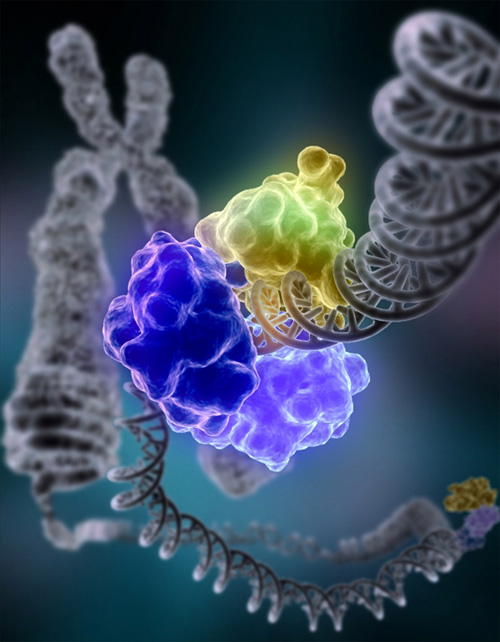
PARP is a different DNA repair enzyme — one that handles smaller, everyday damage rather than the serious breaks that homologous recombination deals with. In a healthy cell, blocking PARP is not a big deal, because the homologous recombination backup system still cleans up the mess. But in an HRD-positive or BRCA-mutated cancer cell, that backup system is already broken. Block PARP on top of that, and damage piles up faster than the cell can survive — a concept researchers call synthetic lethality, where disabling either repair system alone does little, but disabling both together is fatal to the cell. This is precisely why the biomarker distinction above matters so much for who actually benefits.
Because ovarian cancer treatment happens at different points in the disease timeline, Zejula is approved for two distinct maintenance situations, each with its own biomarker requirement.
For adults with advanced ovarian, fallopian tube, or primary peritoneal cancer who are in complete or partial response after their first round of platinum-based chemotherapy, and whose cancer is confirmed HRD-positive.
For adults with recurrent disease who are in complete or partial response to platinum-based chemotherapy, and who have a confirmed or suspected harmful germline BRCA mutation.
Zejula is taken as an oral tablet, once daily, with or without food, continuing until the disease progresses or side effects become unmanageable.
For the first-line HRD-positive indication, your starting dose isn't one-size-fits-all:
For the recurrent BRCA-mutated indication, the dose is a flat 300 mg once daily regardless of weight or platelets.
Because of how Zejula works, your care team will schedule two specific types of monitoring throughout treatment.
A small number of patients on Zejula have developed myelodysplastic syndrome or acute myeloid leukemia (MDS/AML), a serious blood disorder, and some cases were fatal. Your doctor will check your complete blood count weekly for the first month, monthly for the following eleven months, and periodically afterward, and will stop treatment if MDS/AML is confirmed.
Niraparib can raise blood pressure and heart rate in some patients, so these are checked at least weekly for the first two months, then monthly for the first year, and periodically after that.
The most frequently reported effects include nausea, fatigue, low blood counts (affecting platelets, red cells, or white cells), constipation, musculoskeletal pain, abdominal pain, vomiting, decreased appetite, insomnia, headache, and shortness of breath. Zejula can also harm a developing fetus, so effective contraception is required during treatment, and it isn't used during pregnancy or breastfeeding.
Zejula is not yet commercially available in India. Once your HRD or BRCA status is confirmed and your oncologist recommends it, it can still be legally imported for your personal treatment through a Named Patient Program — a regulated pathway for bringing in a doctor-prescribed medicine that isn't yet sold locally. This generally requires:
The Zejula product page has more detail on the process, and our oncology access program covers the same import pathway for related ovarian cancer treatments, including Elahere for platinum-resistant disease.
Whether Zejula fits your situation depends on details specific to you — which indication applies, your biomarker results, even your weight and platelet count. Rather than guessing from general information online, send our team your reports and we'll walk you through exactly what's involved in accessing this medicine, prescription to import, with no obligation attached. Reach out here and we'll take it from there.
Chemotherapy clears the cancer that's visible on scans, but small numbers of resistant cells can survive undetected. Maintenance therapy is meant to keep those cells from regrowing into a new tumor, extending the time before the cancer comes back.
A BRCA mutation is one specific, well-understood cause of HRD, but HRD can also result from other genetic changes. Your tumor can be HRD-positive without a BRCA mutation, which is why doctors sometimes order both tests rather than relying on one alone.
It may be worth confirming with your oncologist whether your biomarker status was documented, especially if you began first-line maintenance before mid-2025. This isn't a reason to panic, but it is a reasonable thing to ask about at your next appointment.
No. Zejula is a PARP inhibitor that blocks a specific DNA repair enzyme, exploiting a weakness unique to cancer cells that already have a broken repair system (HRD or BRCA mutation) — a very different mechanism from traditional chemotherapy.
For the first-line indication, clinical trial data showed that patients with lower body weight or lower platelet counts were more likely to experience side effects at the higher dose, so a lower starting dose is used for those patients to balance safety and effectiveness.
Through a regulated Named Patient Program, which allows a specific, named patient to import the medicine with a valid prescription, biomarker test results, and the required documentation — a legal route used worldwide for medicines not yet locally available.
Because maintenance therapy means this medicine is in your body every day for months or even years, so its authenticity is not something to gamble on. Websites that sell cancer medicines without proper oversight have been linked to counterfeit, expired, or badly stored products — and a fake tablet can look exactly like the real one. Named Patient Program only supplies medicine sourced directly from the manufacturer or its authorized distributors, with paperwork and batch traceability for every shipment, so you and your oncologist can be confident that what arrives is genuine Zejula.
The information here is meant to help you understand your treatment options and ask better questions at your next appointment — it isn't a substitute for advice from your own oncologist, who knows your full medical history.
Our specialists are here to guide you through every step of the medicine access process.
Mail Us At:
info@namedpatientprogram.com
Contact Us:
+91 9810469557
We get back to you shortly during our working hours.