Ikris Pharma
About Us Named Patient Program
Contact Us
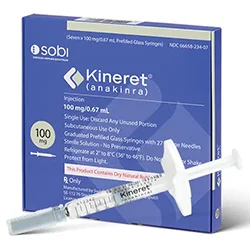
Kineret

Sourced directly from the authorized manufacturer network to ensure authenticity and quality.

You can also access detailed information by clicking Login in the website header.

Kineret

Supplied with complete CDSCO-approved import and customs documentation, including Form 12A & 12B, CDEC, GST Bill of Entry, Commercial Invoice, and Packing List.

Medicine Name: Kineret
Generic Name (API): Anakinra
Dosage Form & Strength: 100 mg/0.67 mL
Route: Subcutaneous (SC) injection, usually once daily
Drug Class: Interleukin-1 receptor antagonist (IL-1Ra)

Manufacturer / Innovator:

Germany

Regulatory Approval:

  • FDA (US)
  • EMA (Europe)
  • HC (Canada)
  • TGA (Australia)
  • and others
Family enjoying life with Named Patient Program access

Your Trustedworthy Partner For Named Patient Program

  • your trusted partner for named patient program

    Over a decade of trusted expertise in Named Patient Access to innovative and life-saving medicines.

  • 100% CDSCO-compliant processes ensuring safe, ethical, and responsible medicine access.

    100% CDSCO-compliant processes ensuring safe, ethical, and responsible medicine access.

  • Medicines sourced from authorized manufacturers with full batch traceability

    Medicines sourced from authorized manufacturers with full batch traceability.

  • EU-GDP Compliant Warehousing for secure, quality-controlled global distribution.

    EU-GDP compliant warehousing for secure, quality-controlled global distribution.

  • Temperature-Controlled Logistics for Safe and Timely Delivery

    Temperature-controlled logistics ensuring safe, reliable, and timely medicine delivery.

GDP Compliant
Licensed Wholesale distributor

Kineret (Anakinra) Injection for Inflammatory Diseases

Kineret (anakinra) is a recombinant form of the naturally occurring human interleukin-1 receptor antagonist. It blocks the biological activity of interleukin-1 alpha (IL-1α) and interleukin-1 beta (IL-1β) by competitively inhibiting their binding to the interleukin-1 type I receptor (IL-1RI), which is expressed across a wide range of tissues and organs. IL-1 is a central driver of fever, rash, joint inflammation and raised acute-phase reactants in autoinflammatory disease; by neutralising it, this medicine controls both systemic and joint manifestations. Kineret is indicated for the treatment of:


  • Rheumatoid Arthritis (RA): To reduce signs and symptoms and slow the progression of structural damage in moderately to severely active rheumatoid arthritis in patients aged 18 years and older who have failed one or more disease-modifying antirheumatic drugs (DMARDs).


  • Neonatal-Onset Multisystem Inflammatory Disease (NOMID): Treatment of NOMID, a severe form of Cryopyrin-Associated Periodic Syndromes (CAPS).


  • Deficiency of Interleukin-1 Receptor Antagonist (DIRA): Treatment of DIRA, a rare life-threatening genetic autoinflammatory condition in which anakinra is essential therapy.


This therapeutic drug is also used by specialists in other conditions such as COVID-19, Periodic fever syndromes, Familial Mediterranean Fever (FMF), and Still’s Disease.


Kineret is a prescription biologic and must be initiated and supervised by a specialist physician experienced in the diagnosis and management of RA, CAPS, FMF or Still's disease.


Recommended Dosage:

Kineret is given as a subcutaneous injection, normally once daily at approximately the same time each day. It is supplied ready for use in a graduated pre-filled syringe that allows doses between 20 mg and 100 mg; because the minimum measurable dose is 20 mg, the syringe is not suitable for patients weighing under 10 kg. Injection sites should be rotated between the upper arms, thighs, abdomen and buttocks to reduce injection site reactions.


  • Rheumatoid arthritis (adults): 100 mg once daily by subcutaneous injection.

  • CAPS / NOMID: The recommended starting dose is 1–2 mg/kg/day. In mild CAPS (FCAS, mild MWS) patients are usually controlled on this starting dose. In severe CAPS (MWS and NOMID/CINCA), the usual maintenance dose is 3–4 mg/kg/day, which may be titrated to a maximum of 8 mg/kg/day based on clinical response and inflammatory markers.

  • DIRA: Weight-based dosing as described in the prescribing information, with titration according to response.


Renal impairment: No dose adjustment is needed in mild renal impairment. Caution is advised in moderate impairment. In severe renal impairment or end-stage renal disease (creatinine clearance below 30 mL/min), administration of the prescribed dose every other day should be considered.


The dose, frequency and duration of treatment are determined by the treating physician according to the indication, body weight, renal function and clinical response. This information is not a treatment plan. For personalized medical advice, consult your doctor and refer to the full prescribing information.

Kineret Warnings and Precautions

  • Kineret may increase the risk of serious infections. Do not start treatment if you have an active infection. Contact your doctor immediately if you develop fever, chills, cough, sore throat, burning while urinating, or any signs of infection.

  • Before starting treatment with this therapeutic drug, your doctor should screen you for latent tuberculosis and viral hepatitis according to clinical guidelines. This helps reduce the risk of reactivation of infections during treatment with immune-modifying medicines.

  • Kineret may lower your neutrophil count, increasing infection risk. Blood tests should be done before treatment, monthly during the first few months, and periodically afterward. Treatment should not begin if your neutrophil count is too low.

  • Redness, swelling, bruising, itching, or pain at the injection site is very common, especially during the first two weeks. Rotating injection sites, allowing the syringe to reach room temperature, and using cold packs may reduce discomfort.

  • Serious allergic reactions, including anaphylaxis and angioedema, have been reported with Kineret. Do not use this medicine if you are allergic to anakinra or its ingredients. Seek immediate medical attention if severe allergy symptoms occur.

  • Kineret may increase liver enzyme levels and, rarely, cause liver inflammation. Your doctor may recommend liver function tests, especially during the first month of treatment. Inform your doctor if you develop symptoms of liver problems.

  • Rare cases of DRESS syndrome, a serious allergic reaction, have been reported, mainly in children with SJIA. Contact your doctor immediately if you develop a widespread rash, fever, swollen glands, or facial swelling during treatment.

  • Rare lung conditions, including interstitial lung disease and pulmonary hypertension, have been reported, mainly in children with Still's disease receiving IL-1 or IL-6 inhibitors. Tell your doctor if you develop persistent cough or breathing difficulties.

  • Do not use Kineret with etanercept or other TNF-α inhibitors, as this increases the risk of serious infections and low neutrophil counts. Avoid receiving live vaccines while being treated with Kineret unless advised by your doctor.

  • The safety of Kineret during pregnancy is not well established. It should only be used if clearly needed. Breastfeeding should be stopped during treatment. Discuss pregnancy or breastfeeding plans with your healthcare provider before starting therapy.

  • Kineret should be prepared, stored, and injected exactly as instructed. Patients and caregivers must receive proper training on self-injection, storage, and safe disposal before using Kineret at home to ensure safe and effective treatment.

How to Access Kineret in India: A 6-Step Process

Step 1 – Search & request your medicine: The patient or treating doctor submits a request with basic details to initiate the access process.

Step 2 – Verification & eligibility review: The team verifies availability and reviews eligibility against regulatory and clinical requirements to ensure a compliant pathway.

Step 3 – Receive quote & delivery timeline: A transparent quotation is shared, covering medicine cost, logistics, and a clear delivery timeline.

Step 4 – Regulatory approval process: Assistance is provided to secure the approvals and documentation required for legal cross-border access.

Step 5 – Temperature-controlled import & handling: The medicine is sourced and transported under strict GDP-compliant, cold-chain conditions to maintain product integrity.

Step 6 – Secure delivery: The medicine is delivered to the patient or treating hospital, with updates provided at each stage.

Note: From request to delivery, every step is designed to ensure your treatment reaches you safely, compliantly, and without unnecessary delays.

What documents are required to import KINERET to India?

KINERET (anakinra) injection may be imported in the patient's name only, by patients or government hospitals. The following documentation is required:


  • A valid prescription from a qualified doctor

  • The patient's diagnostic reports

  • Patient ID proof (issued by the Government of India)


How is the order confirmed?

The order is confirmed only after receipt and verification of a valid prescription from the doctor and, if applicable, an import permit.


Is KINERET available in India?


KINERET (anakinra injection) is a prescription medicine that legally requires a doctor's prescription to be dispensed. As of current publicly available information, KINERET is not commercially marketed or registered in India.


However, patients in India can legally access KINERET through the Named Patient Program (NPP) — an import provision that allows a medicine not yet registered in India to be imported in the name of an individual patient, on the prescription of their treating physician.


NamedPatientProgram.com (NPP) act as a facilitator under named patient supply, providing input on:


  • Availability of Kineret in India and pathways to access it

  • Availability in Gulf countries (Bahrain, Oman, Qatar, Kuwait, Iraq, Saudi Arabia, and the UAE)

  • Kineret price in India under the NPP route

  • Sourcing from genuine, reliable channels in the USA, Europe, China, Singapore, Canada, and Australia

  • Ensuring full transparency throughout the process


KINERET can be made available to patients, doctors, and hospitals across major cities in India, including Gurgaon, Delhi, Bangalore, Mumbai, Navi Mumbai, Thane, Hyderabad, Mysore, Kerala, Chennai, Coimbatore, Madurai, Kolkata, Ahmedabad, Surat, Vadodara, Pune, Nagpur, Nashik, Jaipur, Udaipur, Lucknow, Kanpur, Gorakhpur, Chandigarh, Mohali, Faridabad, Noida, Ghaziabad, Kochi, Trivandrum, Kozhikode, Thrissur, Kannur, Mangalore, Bhubaneswar, Patna, Ranchi, Raipur, Guwahati, Visakhapatnam, Vijayawada, Goa, Jammu, Srinagar, Dehradun, Bhopal, Indore, Ludhiana, Amritsar, and others — and can facilitate delivery to the patient's treating hospital. Orders are confirmed only upon receipt of a valid doctor's prescription and, where applicable, an import permit.

Sourcing & Delivery of Kineret

NamedPatientProgram.com (NPP) can source Kineret from reliable global manufacturers and qualified pharmaceutical supply channels and facilitate supply to patients, doctors, and hospitals under applicable legal provisions. As a temperature-sensitive biologic supplied in pre-filled syringes, Kineret requires validated cold-chain handling at 2°C to 8°C throughout transit, with protection from light and freezing.


All prescriptions are dispensed and checked by registered pharmacists and dispatched from New Delhi, India, after legal requirements are fulfilled.


For Kineret cost in India and availability, contact NPP via WhatsApp at +91 98104 69557 | Toll-Free: 1800-1200-365 or email info@namedpatientprogram.com

Availability of Kineret® Across Major Cities in India


Patients across India can access Kineret® through regulated import pathways, with delivery arranged to the treating hospital or patient based on a valid specialist's prescription.


Mumbai: A major centre for rheumatology and paediatric rheumatology care, Mumbai sees consistent demand for IL-1 targeted therapies for autoinflammatory and Still's disease patients.


Bangalore: With a growing network of multispecialty hospitals and rare disease clinics, Bangalore supports access to global biologic therapies through structured import pathways guided by treating specialists.


Delhi: As part of the Delhi NCR region, the city has a strong concentration of rheumatology and clinical immunology departments, making it a key location for accessing advanced imported biologics.


Gurgaon: Home to leading hospitals like Medanta, Gurgaon plays an important role in facilitating access to innovative rare disease treatments through coordinated care pathways.


Noida: With proximity to Delhi and access to top hospitals, Noida patients benefit from streamlined logistics and specialist-driven treatment planning.


Hyderabad: Hyderabad's advanced healthcare infrastructure and rheumatology expertise support patients seeking access to internationally approved biologic therapies.


Chennai: Known for its established medical ecosystem, Chennai attracts patients from across India for complex autoimmune and autoinflammatory disease management.


Kolkata: A key eastern healthcare hub, Kolkata offers access to advanced rheumatology and paediatric immunology care through leading hospitals.


Ahmedabad: Ahmedabad's expanding healthcare sector and specialist clinics support patients requiring advanced and imported biologic therapies.


Pune: With reputed hospitals and a growing rheumatology infrastructure, Pune is an emerging centre for access to specialized immunology treatments.


Chandigarh: Serving North India, Chandigarh provides access to advanced medical care through reputed institutions and specialist-led treatment planning.


Jaipur: Jaipur's improving healthcare network enables patients to explore access to innovative rare disease therapies through structured import processes.


Lucknow: As a major city in North India, Lucknow supports access to advanced rheumatology treatments through both public and private healthcare institutions.


Indore: Indore is emerging as a regional healthcare hub, offering access to specialized rheumatology care and modern treatment pathways.


Bhopal: Patients in Bhopal can access advanced immunology treatments through the growing healthcare infrastructure and referral networks.


Nagpur: Nagpur serves as a central hub for patients across Vidarbha, with increasing access to rheumatology care and specialized biologic therapies.


Surat: Surat's developing healthcare ecosystem supports patients seeking access to global biologic treatments through coordinated care.


Patna: As a major city in Eastern India, Patna provides growing access to rare disease treatment through expanding hospital networks.


Coimbatore: Coimbatore is known for quality healthcare services, offering access to advanced rheumatology treatments in South India.


Kochi: With modern hospitals and specialist care, Kochi enables patients to explore access to internationally approved biologic therapies.


Note: Access timelines may vary depending on documentation, regulatory approvals, and sourcing logistics.


Access/Buy Kineret® at Leading Hospitals in India

Kineret® is typically used in rheumatology, clinical immunology and paediatric rare disease settings, and can be accessed at leading hospitals across India, where specialists guide treatment decisions and coordinate patient-specific access pathways.


Major Hospitals Covered:

AIIMS: As a leading government medical institution, AIIMS provides comprehensive rheumatology and clinical immunology services and supports patients requiring access to specialized biologic therapies.


PGIMER Chandigarh: A premier North Indian institute with strong rheumatology and paediatric immunology departments managing complex autoinflammatory conditions.


SGPGIMS Lucknow: Known for its dedicated clinical immunology and rheumatology department, SGPGIMS manages rare autoinflammatory syndromes and supports specialist-led access pathways.


Apollo Hospitals: With a nationwide presence, Apollo Hospitals offers advanced rheumatology services and facilitates access to global treatment options through its extensive medical network.


Fortis Healthcare: Fortis hospitals are equipped with modern immunology facilities and multidisciplinary teams that manage complex treatment pathways for patients.


Max Healthcare: Max Healthcare is known for its strong rheumatology departments, providing access to innovative biologic therapies under expert clinical supervision.


Manipal Hospitals: Manipal Hospitals supports advanced autoimmune and autoinflammatory care through experienced specialists and structured treatment planning across multiple cities.


Kokilaben Dhirubhai Ambani Hospital: A leading private hospital in Mumbai, Kokilaben Hospital offers cutting-edge rheumatology care and access to advanced global therapies.


Medanta – The Medicity: Medanta is a renowned super-specialty hospital where complex rheumatology and rare disease cases are managed with advanced treatment protocols and global access support.


BLK-Max Super Speciality Hospital: BLK-Max provides comprehensive rheumatology and paediatric services and supports patients seeking access to specialized treatment options.


Sir Ganga Ram Hospital: A well-established hospital in Delhi, Sir Ganga Ram provides multidisciplinary rheumatology care supported by experienced specialists.


Narayana Health: Narayana Health combines affordability with advanced medical care, offering rheumatology and paediatric services across multiple locations in India.


Amrita Hospital: Amrita Hospital provides high-quality rheumatology and clinical immunology care with a focus on patient-centric treatment and access to modern therapies.


Yashoda Hospitals: Yashoda Hospitals are known for their strong rheumatology departments and advanced treatment infrastructure in South India.


Aster Hospitals: Aster Hospitals offer integrated immunology and rheumatology services and support access to innovative therapies through coordinated treatment planning.


Christian Medical College (CMC) Vellore: CMC Vellore is a nationally recognised referral centre for complex rheumatology and rare autoinflammatory disease management.


Jaslok Hospital: Jaslok Hospital is known for its specialized medical services and advanced rheumatology treatment capabilities.


Ruby Hall Clinic: Ruby Hall Clinic offers comprehensive rheumatology care and supports patients requiring advanced and imported therapies.


CARE Hospitals: CARE Hospitals provide modern rheumatology treatment facilities and multidisciplinary care across multiple cities.


Global Hospitals: Global Hospitals are equipped with advanced medical technologies and immunology expertise to manage complex autoinflammatory cases.


Note: Kineret® is not stocked for direct purchase but is arranged through compliant import processes and delivered to the patient or hospital for patient-specific treatment.

Written By:

Nitin Goswami

Medically Reviewed By:

Shilpi Banerjee
TRUSTED BY HEALTHCARE PROFESSIONALS & HOSPITALS

Need Help
Accessing Medicines?

Our specialists are here to guide you through every step of the medicine access process.

Let's us help!

Send us a message

Read how to access medicines

Read More arrow icon

Frequently Asked
Questions

Read More