

Colorectal Cancer Medicines in India: Imported Options by Gene Result
What Indian hospital data say about bowel cancer
Bowel cancer is often described as a disease of people over 50. Several Indian cancer centres have reported a different picture, with many patients in their 20s, 30s and 40s:
- AIIMS, New Delhi: among 970 patients treated over two decades, the average age at diagnosis was 47.7 years, and most patients came with stage II or III disease [3]. Of the rectal cancers, 58% were in the lower rectum, close to the anus.
- IGIMS, Patna: 344 of 1,028 patients (33.4%) were younger than 40. In this younger group, 74.1% had rectal cancer [4].
- Kidwai Memorial Institute, Bengaluru: 279 of 964 patients (28.8%) were under 45. These younger patients more often had signet ring, mucinous or poorly differentiated tumours, and were more likely to have spread at diagnosis [5].
- AIIMS, New Delhi (metastatic disease): in 377 patients with cancer that had spread, the median age was 46 and the rectum was the most common starting point. Only 12.5% received a biological medicine with their first chemotherapy [6].
GLOBOCAN estimates 38,499 deaths from colorectal cancer in India in 2024 [1]. Worldwide, it is the third most common cancer, with about 2,041,007 new cases in the same year [2].
The gene report decides which newer medicine fits
For bowel cancer that has spread, treatment usually begins with chemotherapy; at AIIMS, 70% of such patients first received an oxaliplatin-based combination [6]. The medicines on this page are used alongside it or after it, and most are linked to a specific result on the tumour test. Indian studies show these results vary from one centre and testing method to another:
| Tumour test result | What Indian studies found | Medicines on this page |
|---|---|---|
| BRAF V600E | 3 of 330 patients (1%) at Tata Memorial Hospital, Mumbai [7]; 7.1% of 112 tumours in a sequencing study [8] | Braftovi (with cetuximab, with or without fluorouracil-based chemotherapy) |
| KRAS mutation | 15.4% at Tata Memorial, where G12D was the most frequent type [7]; 35.7% of 112 tumours tested by next-generation sequencing in another Indian cohort [8] | Lumakras with panitumumab, only for the G12C type |
| MSI-high or mismatch repair deficient (dMMR) | Indian data are limited; a 17-centre study of bowel and other cancers found MSI-high or MMR-deficient tumours in 129 of 519 patients, and an inherited Lynch syndrome change in 66 of those 129 [9] | Opdivo (alone or with ipilimumab), Jemperli |
| HER2-positive | No large Indian figure found | Trastuzumab Rezetecan (China NMPA) |
| NTRK gene fusion | Rare; no Indian figure found | Vitrakvi, Rozlytrek, Augtyro (approved for any solid tumour with this fusion) |
| Any result, after standard chemotherapy | – | Fruzaqla or Elunate (fruquintinib), Zaltrap with FOLFIRI |
The two BRAF figures and the two KRAS figures come from different hospitals and different methods: Sanger sequencing at Tata Memorial [7] and next-generation sequencing in the other cohort [8]. Ask your lab which test was used on your sample.
Imported colorectal cancer medicines by type
All 11 medicines below are prescription-only. Tap a type to filter. Each card opens the full medicine page with dosage, storage and safety details.





Compare all 11 colorectal cancer medicines
| Medicine | Generic name | Colorectal cancer type | Form | Approved by |
|---|---|---|---|---|
| Braftovi | encorafenib | BRAF V600E | Capsule | US FDA |
| Lumakras | sotorasib | KRAS G12C | Tablet | US FDA |
| Opdivo | nivolumab | MSI-H/dMMR | IV infusion | US FDA |
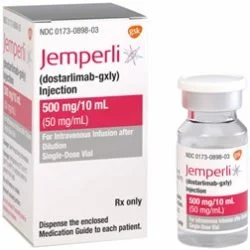
| Jemperli | dostarlimab | MSI-H/dMMR | IV infusion | US FDA |
| Trastuzumab Rezetecan | trastuzumab rezetecan | HER2-positive | IV infusion | China NMPA |
| Vitrakvi | larotrectinib | NTRK fusion | Capsule | US FDA |
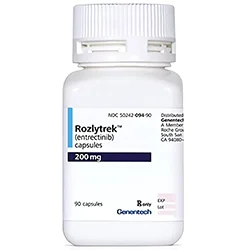
| Rozlytrek | entrectinib | NTRK fusion | Capsule | US FDA |
| Augtyro | repotrectinib | NTRK fusion | Capsule | US FDA |
| Fruzaqla | fruquintinib | After chemotherapy | Capsule | US FDA |
| Elunate | fruquintinib | After chemotherapy | Capsule | China NMPA |
| Zaltrap | ziv-aflibercept | After chemotherapy | IV infusion | US FDA |
Papers that usually come before the prescription
Because each approval is tied to a test result or to earlier treatment, your oncologist will normally want these on file:
| Paper | What it shows | Medicines that depend on it |
|---|---|---|
| Biopsy or surgery histopathology report | Confirms adenocarcinoma of the colon or rectum and its stage | All |
| RAS and BRAF test | KRAS G12C points to Lumakras with panitumumab; BRAF V600E points to Braftovi with cetuximab | Lumakras, Braftovi |
| MSI test or MMR immunohistochemistry | MSI-high or dMMR tumours can be treated with immunotherapy; Jemperli's rectal approval covers stage II/III disease | Opdivo, Jemperli |
| HER2 test | Needed before a HER2-targeted antibody-drug conjugate | Trastuzumab Rezetecan |
| NTRK fusion result (from a sequencing panel) | Required before any of the NTRK medicines | Vitrakvi, Rozlytrek, Augtyro |
| List of chemotherapy already given | Fruzaqla, Lumakras and the single-agent Opdivo use require earlier fluoropyrimidine, oxaliplatin and irinotecan; Zaltrap follows an oxaliplatin regimen | Fruzaqla, Elunate, Lumakras, Opdivo, Zaltrap |
Import permit, hospital delivery and help with cost
Every medicine here is imported in the name of one patient. Our pharmacist fills in Form 12A in the patient's name, the patient files it with CDSCO, and CDSCO then grants the import permit on Form 12B. For the full checklist of documents, see how the Form 12A and 12B permit works. Opdivo, Jemperli, Zaltrap and Trastuzumab Rezetecan are given as a drip in hospital, so they can be sent directly to the hospital pharmacy by cold-chain hospital delivery.
Some combinations on this page need a second medicine, such as cetuximab with Braftovi or panitumumab with Lumakras, and treatment often continues for months. Our patient support and access programs page lists manufacturer programs, government schemes and charities that may reduce the cost.
How to get these colorectal cancer medicines in India
Prescription
Your oncologist prescribes the medicine.
Share documents
Send the prescription and latest reports through Online Order.
Import paperwork
Our team checks the source and the import permissions.
Delivery
Delivered with the right storage, including cold chain.
Read How to Order and Indian import regulations. We also serve patients in Delhi NCR, Bangalore, Chennai, Mumbai, Kolkata and Hyderabad.
Has your oncologist prescribed one of these medicines?
Share the prescription and we will guide you on availability and next steps.
Read more about colorectal cancer
- BRAF V600E colorectal cancer explained
- KRAS G12C mutation and Lumakras (sotorasib): a complete guide
- Fruzaqla (fruquintinib) for advanced colorectal cancer: a patient guide
- FDA approves Jemperli for dMMR locally advanced rectal cancer
- All Oncology medicines
References
- IARC Global Cancer Observatory. GLOBOCAN 2024 – India fact sheet (September 2026). https://gco.iarc.who.int/media/globocan/factsheets/populations/356-india-fact-sheet.pdf
- IARC Global Cancer Observatory. GLOBOCAN 2024 – Colorectum fact sheet (July 2026). https://gco.iarc.who.int/media/globocan/factsheets/cancers/41-colorectum-fact-sheet.pdf
- Deo SVS et al. Colorectal cancers in low- and middle-income countries: demographic pattern and clinical profile of 970 patients treated at a tertiary care cancer center in India. JCO Glob Oncol. 2021;7:1110-1115. https://pubmed.ncbi.nlm.nih.gov/34236917/
- Raj S et al. Epidemiological trends of colorectal cancer cases in young population of Eastern India. J Cancer Res Ther. 2024;20(3):817-821. https://pubmed.ncbi.nlm.nih.gov/39023588/
- Rao AN et al. Colorectal cancer trends in younger versus older adults: an analysis from a tertiary cancer centre. Indian J Surg Oncol. 2026;17(6):1350-1355. https://pubmed.ncbi.nlm.nih.gov/42381789/
- Sharma V et al. Metastatic colo-rectal cancer: real life experience from an Indian tertiary care center. BMC Cancer. 2021;21:630. https://pubmed.ncbi.nlm.nih.gov/34049505/
- Shetty O et al. The prevalence of BRAF, PIK3CA, and RAS mutations in Indian patients with colorectal cancer. South Asian J Cancer. 2022;11(3):190-194. https://pubmed.ncbi.nlm.nih.gov/36620501/
- Jauhri M et al. Prevalence and coexistence of KRAS, BRAF, PIK3CA, NRAS, TP53, and APC mutations in Indian colorectal cancer patients. Tumour Biol. 2017;39(2). https://pubmed.ncbi.nlm.nih.gov/28222664/
- Sheth H et al. Pan-cancer prevalence of microsatellite instability and Lynch syndrome in India. Fam Cancer. 2026;25(4):93. https://pubmed.ncbi.nlm.nih.gov/42842020/
- US FDA prescribing information for each US-approved medicine (DailyMed). https://dailymed.nlm.nih.gov/dailymed/
This page gives general information only and does not replace medical advice. All medicines listed are prescription-only and must be used under a qualified oncologist.