

Bile Duct and Gallbladder Cancer Medicines in India: Imported Options by Tumour Test
Bile duct cancer, gallbladder cancer and why the label on your report matters
Bile is made in the liver, collected by a branching set of tubes, stored in the gallbladder and released into the small intestine. Cancer can start in any part of this route. Doctors split it into:
- Intrahepatic cholangiocarcinoma: starts in the small bile ducts inside the liver. GLOBOCAN counts these tumours together with liver cancer, not with gallbladder cancer [4].
- Perihilar and distal cholangiocarcinoma: start in the larger ducts outside the liver, near where they leave it or close to the pancreas.
- Gallbladder cancer: starts in the wall of the gallbladder itself.
The exact site written on the biopsy report is not just a detail. Some approvals cover all biliary tract cancers, some only cholangiocarcinoma, and one only the intrahepatic type, so the same gene result can lead to a different medicine depending on where the cancer began.
What Indian hospitals see
- Tata Memorial Hospital, Mumbai: 1,950 patients were enrolled in its gallbladder cancer registry between 2019 and 2022. Most came from the northern and eastern states along the Ganga, more than 55% were from lower-income families, and patients with early disease lived a median of 58.2 months, compared with 4.2 months when it had already spread [3].
- Tata Memorial Centre, Varanasi: among 170 new gallbladder cancer patients in 2021, the median age was 56, 65.5% were women and 85.8% had advanced disease. In 20% the cancer was an incidental finding, and gemcitabine with cisplatin was the chemotherapy most often used [5].
- Gene testing across Indian centres: in 376 gallbladder cancers, patients were diagnosed at a median age of 54, nearly ten years younger than in international cohorts, and ERBB2 (the HER2 gene) was altered in 15% [6].
India's 2024 GLOBOCAN figure places gallbladder cancer 16th among new cancers but 13th among cancer deaths [1], which shows how often it is found late.
Which tumour test result points to which medicine
Every medicine on this page is tied to a specific finding on the tumour report and, except for some uses of the NTRK, BRAF and dMMR medicines, to chemotherapy already given. Indian studies give a first idea of how often each finding turns up:
| Finding on the report | Indian data so far | Matching medicines here |
|---|---|---|
| FGFR2 fusion or rearrangement | In 220 Indian cholangiocarcinomas, the FGFR2 changes seen were mostly not fusions (3 mutations, 3 amplifications and 1 unclear variant among 8 changes), unlike the fusion-led pattern reported abroad [7] | Pemazyre, Lytgobi (intrahepatic only), Fanregratinib (intrahepatic only), Tinengotinib (after an FGFR medicine) |
| HER2-positive (IHC 3+) | 20% of 50 advanced gallbladder cancers scored 3+ at PGIMER, Chandigarh [8]; 18.29% of 235 operated gallbladder cancers were HER2-positive in Cuttack [9] | Ziihera |
| NRG1 gene fusion | Uncommon; we found no Indian frequency | Bizengri (cholangiocarcinoma only) |
| BRAF V600E | We found no Indian biliary frequency | Tafinlar with Mekinist (any solid tumour with this change, after earlier treatment) |
| NTRK gene fusion | Very uncommon; no Indian biliary frequency published that we could find | Vitrakvi, Rozlytrek, Augtyro |
| Mismatch repair deficient (dMMR) or MSI-high | MSI-high in 1 of 29 Indian cholangiocarcinomas tested [7] and 2 of 170 gallbladder cancers [6] | Jemperli |
| IDH1 mutation | 10.2% of Indian cholangiocarcinomas without a defined site [7]; seen mainly in cholangiocarcinoma, not gallbladder cancer, in a second Indian series of 154 patients [10] | None on this page; ask your oncologist |
These figures come from different hospitals, sample types and test panels. A result that says "FGFR2 amplification" or "FGFR2 mutation" is not the same as the fusion or rearrangement that the FGFR2 approvals require; the lab report should name the exact change.
Imported bile duct cancer medicines by type
All 12 medicines below are prescription-only. Tap a type to filter. Each card opens the full medicine page with dosage, storage and safety details.





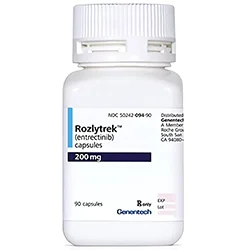

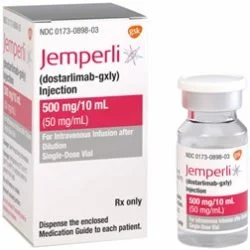
Compare all 12 bile duct cancer medicines
| Medicine | Generic name | Bile duct cancer type | Form | Approved by |
|---|---|---|---|---|
| Pemazyre | pemigatinib | FGFR2 fusion | Tablet | US FDA |
| Lytgobi | futibatinib | FGFR2 fusion | Tablet | US FDA |
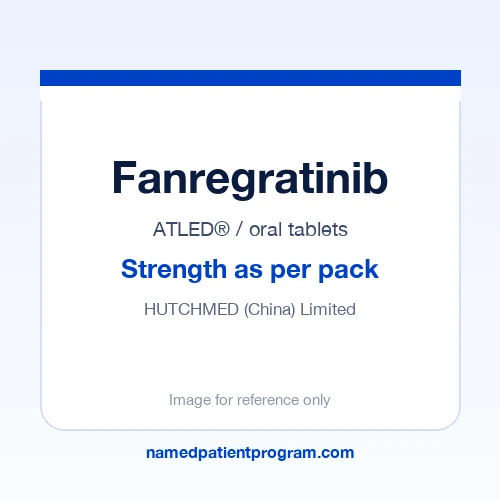
| Fanregratinib | fanregratinib | FGFR2 fusion | Tablet | China NMPA |
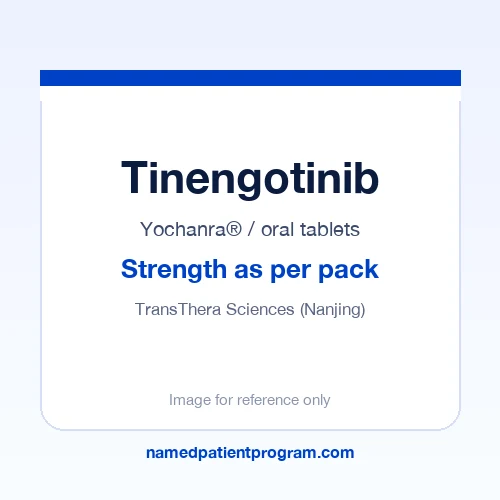
| Tinengotinib | tinengotinib | FGFR2 fusion | Tablet | China NMPA |
| Ziihera | zanidatamab | HER2-positive | IV infusion | US FDA |
| Bizengri | zenocutuzumab | NRG1 fusion | IV infusion | US FDA |
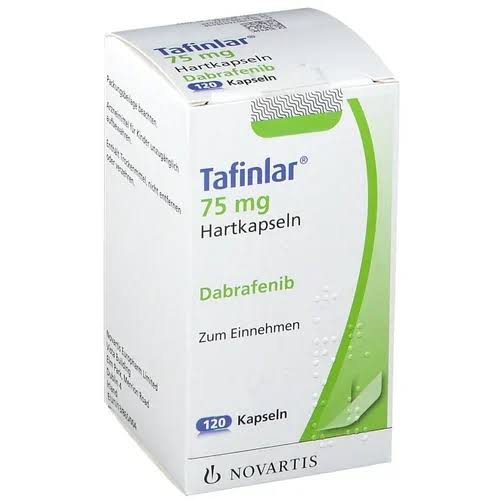
| Tafinlar | dabrafenib | BRAF V600E | Capsule | US FDA |
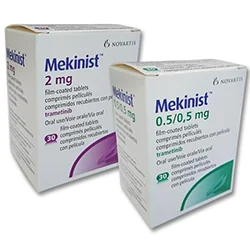
| Mekinist | trametinib | BRAF V600E | Tablet | US FDA |
| Vitrakvi | larotrectinib | NTRK fusion | Capsule | US FDA |
| Rozlytrek | entrectinib | NTRK fusion | Capsule | US FDA |
| Augtyro | repotrectinib | NTRK fusion | Capsule | US FDA |
| Jemperli | dostarlimab | dMMR | IV infusion | US FDA |
Reports your oncologist will want before prescribing
| Report | Why it is needed | Medicines that rely on it |
|---|---|---|
| Histopathology of the biopsy or operated specimen | Confirms adenocarcinoma and states whether it began in the gallbladder or in a bile duct inside or outside the liver | All |
| Next-generation sequencing panel that includes RNA or fusion testing | Looks for FGFR2, NRG1 and NTRK fusions and BRAF V600E; ask the lab whether gene fusions were part of the test | Pemazyre, Lytgobi, Fanregratinib, Tinengotinib, Bizengri, Vitrakvi, Rozlytrek, Augtyro, Tafinlar, Mekinist |
| HER2 immunohistochemistry | Ziihera's biliary approval needs a score of 3+; a 2+ result does not qualify for this use | Ziihera |
| MMR immunohistochemistry or MSI test | Shows whether the tumour is mismatch repair deficient | Jemperli |
| Record of chemotherapy and other medicines already given | Most biliary approvals here apply after earlier treatment; Tinengotinib needs a previous FGFR medicine as well | Most |
Import permit, delivery to the hospital and cost support
Every import is tied to a single named patient. The patient files Form 12A with CDSCO (our pharmacist fills it in for them), and the regulator replies with a Form 12B permit. A checklist of papers is on the Form 12A and 12B import permit. Ziihera, Bizengri and Jemperli are given as infusions in hospital, so they can travel straight to the hospital pharmacy through temperature-controlled hospital delivery.
Targeted tablets for biliary cancer are usually taken every day for as long as they keep working, so families often worry about how long they can afford them. Help may be available from drug company schemes, government cover or charities; see our patient support and access programs for the list.
How to get these bile duct cancer medicines in India
Prescription
Your oncologist prescribes the medicine.
Share documents
Send the prescription and latest reports through Online Order.
Import paperwork
Our team checks the source and the import permissions.
Delivery
Delivered with the right storage, including cold chain.
Read How to Order and Indian import regulations. We also serve patients in Delhi NCR, Bangalore, Chennai, Mumbai, Kolkata and Hyderabad.
Has your oncologist prescribed one of these medicines?
Share the prescription and we will guide you on availability and next steps.
Read more about bile duct cancer
- Bile Duct Cancer (Cholangiocarcinoma): Symptoms, Causes, FGFR2 Testing and Treatment
- All Oncology medicines
References
- IARC Global Cancer Observatory. GLOBOCAN 2024 – India fact sheet (September 2026). https://gco.iarc.who.int/media/globocan/factsheets/populations/356-india-fact-sheet.pdf
- IARC Global Cancer Observatory. GLOBOCAN 2024 – Gallbladder fact sheet (July 2026). https://gco.iarc.who.int/media/globocan/factsheets/cancers/12-gallbladder-fact-sheet.pdf
- Patkar S et al. Hospital-based gallbladder cancer registry from a high-volume referral cancer centre in India. Cancer Epidemiol. 2025;99:102958. https://pubmed.ncbi.nlm.nih.gov/41237686/
- IARC Global Cancer Observatory. GLOBOCAN 2024 – Liver and intrahepatic bile ducts fact sheet. https://gco.iarc.who.int/media/globocan/factsheets/cancers/11-liver-and-intrahepatic-bile-ducts-fact-sheet.pdf
- Kashyap L et al. Pattern of care and outcomes of gallbladder cancer patients: retrospective study from a high incidence region in India. South Asian J Cancer. 2023;12(3):245-249. https://pubmed.ncbi.nlm.nih.gov/38047044/
- Suryavanshi M et al. Genomic profiling of Indian gallbladder carcinoma: mutational insights in a high-incidence population. JCO Glob Oncol. 2025;11:e2500332. https://pubmed.ncbi.nlm.nih.gov/41418080/
- Suryavanshi M et al. Genomic landscape of cholangiocarcinoma in India: ethnic variants and implications for targeted therapy. BMC Cancer. 2026;26:518. https://pubmed.ncbi.nlm.nih.gov/42010540/
- Verma P et al. HER2/ERBB2 overexpression in advanced gallbladder carcinoma: immunocytochemistry and FISH on fine-needle aspiration cytology samples. J Clin Pathol. 2024;77(9):614-621. https://pubmed.ncbi.nlm.nih.gov/37221046/
- Dash S et al. Human epidermal growth factor receptor-2/neu expression in gallbladder cancer is significantly associated with clinicopathological parameters and survival. Indian J Gastroenterol. 2026;45(4):723-734. https://pubmed.ncbi.nlm.nih.gov/39899204/
- Limaye S et al. Actionable genomic landscape of biliary tract cancer in the Indian population. Oncologist. 2026;31(3):oyaf430. https://pubmed.ncbi.nlm.nih.gov/41520156/
- US FDA prescribing information for each US-approved medicine (DailyMed). https://dailymed.nlm.nih.gov/dailymed/
This page gives general information only and does not replace medical advice. All medicines listed are prescription-only and must be used under a qualified oncologist.