

Cervical and Uterine Cancer Medicines in India: Imported Options
Cervical cancer and uterine cancer are not the same disease
Both begin in the womb, so the names are often mixed up. They grow from different tissue, have different causes and are matched to different medicines:
| Cervical cancer | Uterine (endometrial) cancer | |
|---|---|---|
| Where it begins | The cervix, the lower opening of the womb into the vagina | The endometrium, the lining inside the main body of the womb |
| India, 2024 | 79,360 new cases and 36,319 deaths [1] | 28,308 new cases and 6,362 deaths (corpus uteri) [1] |
| World, 2024 | 604,196 new cases, 9th among all cancers [4] | 434,620 new cases, 16th among all cancers [5] |
| Main cause or marker | Persistent infection with high-risk HPV; types 16 and 18 cause around 76% of cases worldwide [6] | Tumour tests such as mismatch repair (MMR) status guide the choice of immunotherapy |
| Medicines on this page | Tivdak, Socazolimab, Enlonstobart, Famitinib (with camrelizumab) | Jemperli |
Three further medicines on this page, Vitrakvi, Rozlytrek and Augtyro, are approved for any solid tumour that carries an NTRK gene fusion. This change is rare, and it is found only through a sequencing panel on the tumour sample.
Why so many Indian women learn of cervical cancer late
The World Health Organization advises screening with a high-performance test every 5 to 10 years from the age of 30, as one part of its 90–70–90 targets for eliminating cervical cancer [6]. In India, uptake is still very low. In the fifth National Family Health Survey, only 1.9% of women said they had ever been screened. Tamil Nadu reported the highest share, at 9.8% [2]. Indian hospital studies show what follows from this:
- Most patients arrive at stage II or III. Of 587 women treated at Sir Sunderlal Hospital, BHU, Varanasi, 36.3% were at stage II and 45.8% at stage III. Three in four (76.0%) had a tumour of 4 cm or larger, and 91.8% had squamous cell carcinoma [3].
- HPV 16 dominates. At the State Cancer Institute, IGIMS Patna, HPV was detected in 236 of 248 confirmed cervical cancers (95.2%). HPV 16 alone was found in 194 of them (78.2%), and HPV 18 in 22 (8.9%) [7].
- Radiation with chemotherapy is the usual first treatment. In a North Indian series of 435 women with stage I to IVA disease, only 14 (3.2%) had surgery. Most were treated with external radiotherapy followed by a brachytherapy boost, and 71% received more than four cycles of chemotherapy alongside it. Five years later, 64.5% were alive. Where the cancer returned, local relapse came at a median of 35 months and spread to distant organs at 37.6 months [8].
When the disease returns after platinum chemotherapy, or has spread beyond the pelvis, the options become limited. The cervical cancer medicines on this page were approved for exactly that situation.
The MMR result matters in endometrial cancer
A pathologist can check the four mismatch repair proteins (MLH1, PMS2, MSH2 and MSH6) on the same tissue used for diagnosis. If one or more is missing, the tumour is called MMR-deficient (dMMR). In Indian laboratories, a sizeable share of the endometrial cancers tested have shown this:
- Gurugram referral laboratory: 27 of 82 endometrial cancers tested over five years (33%) were dMMR. Loss was more frequent when the lower part of the womb was involved or when there was a family history of cancer [9].
- Tata Memorial Hospital, Mumbai: 50 of 104 tumours tested (48%) were dMMR. All 50 were endometrioid adenocarcinomas, the median age was 53, and the MLH1 and PMS2 pair was lost in 33 of them (66%) [10].
Both figures come from tumours sent for testing at one centre each, so they may not reflect every woman with endometrial cancer in India. A dMMR result can also point to Lynch syndrome in the family, which is worth discussing with a genetic counsellor.
Imported cervical and uterine cancer medicines by type
All 8 medicines below are prescription-only. Tap a type to filter. Each card opens the full medicine page with dosage, storage and safety details.



Compare all 8 cervical and uterine cancer medicines
| Medicine | Generic name | Cervical and uterine cancer type | Form | Approved by |
|---|---|---|---|---|
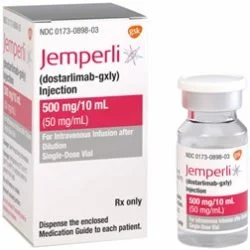
| Jemperli | dostarlimab | Endometrial cancer | IV infusion | US FDA |
| Tivdak | tisotumab vedotin | Cervical cancer | IV infusion | US FDA |
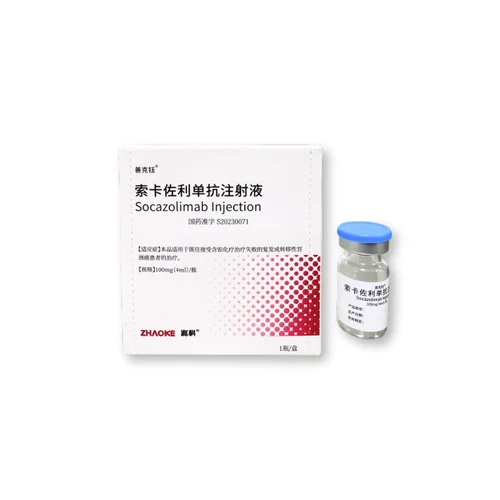
| Socazolimab | socazolimab | Cervical cancer | IV infusion | China NMPA |
| Enlonstobart | enlonstobart | Cervical cancer | IV infusion | China NMPA |
| Famitinib | famitinib malate | Cervical cancer | Capsule | China NMPA |
| Vitrakvi | larotrectinib | NTRK fusion | Capsule | US FDA |
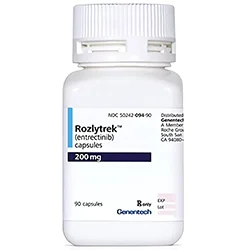
| Rozlytrek | entrectinib | NTRK fusion | Capsule | US FDA |
| Augtyro | repotrectinib | NTRK fusion | Capsule | US FDA |
Reports your oncologist will usually ask for
Approvals here are tied to narrow situations, so the treating doctor will want the following on file before writing the prescription:
| Report | Why it is needed | Medicines linked to it |
|---|---|---|
| Histopathology report with FIGO stage | Confirms whether the cancer began in the cervix or the endometrium, and how far it has spread | All |
| Summary of earlier treatment | Most cervical cancer options here are for disease that grew during or after chemotherapy, usually a platinum drug; Famitinib's second-line use also needs no earlier anti-VEGF antibody such as bevacizumab | Tivdak, Socazolimab, Enlonstobart, Famitinib |
| PD-L1 test (CPS score) | Enlonstobart's Chinese approval is limited to tumours with a combined positive score of 1 or more | Enlonstobart |
| MMR immunohistochemistry or MSI test | Jemperli on its own is approved for dMMR endometrial cancer after platinum chemotherapy; with carboplatin and paclitaxel it is approved whatever the MMR result | Jemperli |
| Sequencing panel showing an NTRK fusion | Required before any of the three NTRK medicines | Vitrakvi, Rozlytrek, Augtyro |
Paperwork, hospital supply and support with cost
These medicines are imported for one patient at a time. The application, Form 12A, is drafted by our pharmacist in the patient's name and filed by the patient; once CDSCO approves it, the regulator grants a Form 12B permit for that import. The documents to keep ready are listed in our guide to the 12A application and 12B import permit.
Jemperli, Tivdak, Socazolimab and Enlonstobart are given as a drip in hospital. We can dispatch them, packed with a temperature logger, to the oncology pharmacy of the treating hospital; the steps are explained under temperature-controlled delivery to hospitals in India. Famitinib and the three NTRK medicines are capsules taken by mouth.
Treatment with these medicines often runs for many months. Manufacturer programs, state and central schemes and cancer charities that may lower the expense are collected on our patient support and access programs page.
How to get these cervical and uterine cancer medicines in India
Prescription
Your oncologist prescribes the medicine.
Share documents
Send the prescription and latest reports through Online Order.
Import paperwork
Our team checks the source and the import permissions.
Delivery
Delivered with the right storage, including cold chain.
Read How to Order and Indian import regulations. We also serve patients in Delhi NCR, Bangalore, Chennai, Mumbai, Kolkata and Hyderabad.
Has your oncologist prescribed one of these medicines?
Share the prescription and we will guide you on availability and next steps.
Read more about cervical and uterine cancer
- FDA approves Jemperli for dMMR locally advanced rectal cancer
- What is cancer? Types, causes, symptoms, stages and treatment
- All Oncology medicines
References
- IARC Global Cancer Observatory. GLOBOCAN 2024 – India fact sheet (September 2026). https://gco.iarc.who.int/media/globocan/factsheets/populations/356-india-fact-sheet.pdf
- Gopika MG, Prabhu PR, Thulaseedharan JV. Status of cancer screening in India: an alarm signal from the National Family Health Survey (NFHS-5). J Family Med Prim Care. 2022;11(11):7303-7307. https://pubmed.ncbi.nlm.nih.gov/36992989/
- Bahadur B et al. Survival beyond treatment: patterns and determinants of disease-free survival in cervical cancer at a tertiary care center in India. Front Oncol. 2026;16:1872738. https://pubmed.ncbi.nlm.nih.gov/42500300/
- IARC Global Cancer Observatory. GLOBOCAN 2024 – Cervix uteri fact sheet (July 2026). https://gco.iarc.who.int/media/globocan/factsheets/cancers/23-cervix-uteri-fact-sheet.pdf
- IARC Global Cancer Observatory. GLOBOCAN 2024 – Corpus uteri fact sheet (July 2026). https://gco.iarc.who.int/media/globocan/factsheets/cancers/24-corpus-uteri-fact-sheet.pdf
- World Health Organization. Cervical cancer – fact sheet. https://www.who.int/news-room/fact-sheets/detail/cervical-cancer
- Pankaj S et al. Prevalence, risk factors and genotype distribution of human papillomavirus infection among women with and without invasive cervical cancer: findings from a hospital-based study in Bihar, India. Natl Med J India. 2024;37(1):13-17. https://pubmed.ncbi.nlm.nih.gov/39096228/
- Thakur P et al. Patterns of care, prognostic factors, and survival outcomes for patients of cervical carcinoma: a study from North India. Cureus. 2024;16(10):e71824. https://pubmed.ncbi.nlm.nih.gov/39559669/
- Jain E et al. The utility of evaluating mismatch repair proteins in endometrial carcinoma: an experience from a tertiary referral centre in North India. Pathologica. 2021;113(2):115-120. https://pubmed.ncbi.nlm.nih.gov/34042092/
- Rekhi B et al. Clinicopathological features of 50 mismatch repair (MMR)-deficient endometrial carcinomas, tested by immunohistochemistry: a single institutional feasibility study, India. Ann Diagn Pathol. 2020;47:151558. https://pubmed.ncbi.nlm.nih.gov/32619922/
- US FDA prescribing information for each US-approved medicine (DailyMed). https://dailymed.nlm.nih.gov/dailymed/
This page gives general information only and does not replace medical advice. All medicines listed are prescription-only and must be used under a qualified oncologist.