

Head and Neck Cancer Medicines in India: Imported Options for Recurrent and Spread Disease
Head and neck cancer in India, site by site
GLOBOCAN does not publish one figure for "head and neck cancer". It reports each site separately, so the table below lists the six sites for India in 2024 and adds them up [1]:
| Site | Where it is | New cases in India, 2024 | Deaths in India, 2024 |
|---|---|---|---|
| Lip and oral cavity | Lips, tongue, gums, inner cheek, floor and roof of the mouth | 205,878 | 86,307 |
| Hypopharynx | Lowest part of the throat, just above the food pipe | 35,489 | 19,040 |
| Larynx | Voice box | 35,169 | 16,667 |
| Oropharynx | Middle of the throat, including the tonsils and the base of the tongue | 22,174 | 12,317 |
| Nasopharynx | Upper throat, behind the nose | 11,013 | 4,699 |
| Salivary glands | Parotid, submandibular and smaller glands that make saliva | 6,791 | 2,033 |
| Total | – | 316,514 | 141,063 |
Totals are our own sum of the six GLOBOCAN rows. 316,514 ÷ 1,562,581 (all new cancers in India) = 20.3%. Thyroid cancer is not included here, because it is usually reported and treated as a separate cancer.
Lip and mouth cancers make up 205,878 of the 316,514 cases, or 65% (205,878 ÷ 316,514) [1]. Exposure to the main causes is wide: in the GATS-2 survey, 21.4% of Indian adults were using smokeless tobacco [3].
What Indian hospital and registry studies show
- Late diagnosis is common. In 150 oral cancer patients studied at Mahamana Pandit Madan Mohan Malviya Cancer Hospital, Varanasi, 70% had advanced-stage disease and 55% had spread to the neck nodes when diagnosed. Men outnumbered women 11.5 to 1, and buccoalveolar cancers (cheek and gum area) were the most frequent [5].
- The gum-and-cheek area leads. Among 851 oral squamous cell cancers at the Regional Cancer Centre of Odisha, the gingivobuccal complex was the most common site and the average age was 53.8 years [6].
- Young adults are affected too. At the Regional Cancer Centre in Imphal, Manipur, 154 patients aged 15 to 39 were studied. The main sites were the tongue (31.1%) and the inner cheek lining, or buccal mucosa (23.4%), and 75.4% came at stage III or IVA (36.4% + 39.0%). For 87.7% of them, no usual risk factor was recorded [7].
- HPV-linked throat cancer looks less common here. In a South Indian cancer centre, only 12 of 143 oropharyngeal squamous cell cancers (8.4%) tested positive for p16, the usual marker of HPV-related disease, and the authors found tobacco and alcohol to be likely risk factors even in the p16-positive cases [8].
- Completing treatment matters. In rural Ratnagiri and Sindhudurg (Maharashtra), the age-standardised 5-year relative survival of 656 oral cancer patients was 38.01%. Five-year survival was 57.75% after surgery with radiotherapy, but 10.37% with chemotherapy alone, which the authors link to late presentation or palliative-intent care [9].
- Screening reach is low. In the NFHS-5 national survey, only 1.2% of men in the 30 to 49 age group had undergone oral cancer screening [10].
Which imported medicine fits which situation
None of the medicines below replace surgery or radiotherapy for early disease. They come into the picture later, and each approval is tied to the tumour type and to what has already been tried:
| Situation | What the approval requires | Medicines on this page |
|---|---|---|
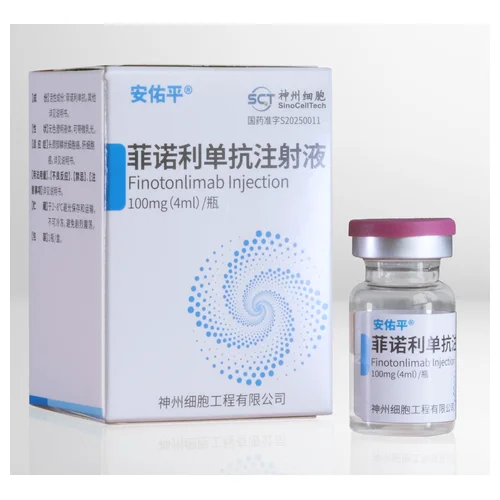
| Head and neck squamous cell cancer that has come back or spread | First treatment, given with platinum chemotherapy | Finotonlimab (China NMPA) |
| Squamous cell cancer that grew during or after platinum treatment | Earlier platinum-based therapy | Opdivo (US FDA) |
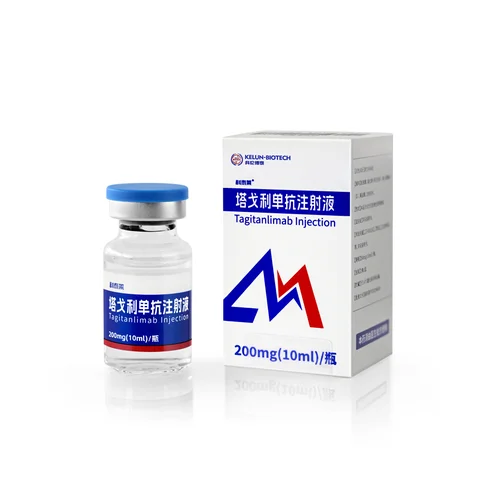
| Nasopharyngeal carcinoma that has returned or spread | First treatment with cisplatin and gemcitabine, or alone after two or more chemotherapy lines | Tagitanlimab (China NMPA) |
| Nasopharyngeal carcinoma after chemotherapy and immunotherapy have both failed | At least two chemotherapy lines and a PD-1 or PD-L1 medicine | Becotatug Vedotin, Izalontamab Brengitecan (China NMPA) |
| Salivary gland or other head and neck tumour with an NTRK gene fusion | A confirmed NTRK fusion; disease that has spread or cannot be removed safely | Vitrakvi, Rozlytrek, Augtyro (US FDA) |
An Indian trial on a lower-cost way to use nivolumab
Doctors at Tata Memorial Hospital, Mumbai, noted that the approved treatment regimens for advanced head and neck squamous cell cancer are within reach of just 1% to 3% of patients in poorer countries, largely due to their price [11]. Their phase 3 trial gave 151 patients an oral metronomic combination (methotrexate, celecoxib and erlotinib), with or without a 20 mg flat dose of nivolumab every three weeks. With nivolumab added, the share of patients alive at one year rose from 16.3% to 43.4%, and median survival went from 6.7 to 10.1 months [11].
The trial dose is far below the dose in the US prescribing information for Opdivo in this cancer. Whether a trial schedule like this suits a particular patient is a decision for the treating oncologist alone.
Imported head and neck cancer medicines by type
All 8 medicines below are prescription-only. Tap a type to filter. Each card opens the full medicine page with dosage, storage and safety details.



Compare all 8 head and neck cancer medicines
| Medicine | Generic name | Head and neck cancer type | Form | Approved by |
|---|---|---|---|---|
| Finotonlimab | finotonlimab | Squamous cell | IV infusion | China NMPA |
| Opdivo | nivolumab | Squamous cell | IV infusion | US FDA |
| Tagitanlimab | tagitanlimab | Nasopharyngeal | IV infusion | China NMPA |
| Becotatug Vedotin | becotatug vedotin | Nasopharyngeal | IV infusion | China NMPA |
| Izalontamab Brengitecan | izalontamab brengitecan | Nasopharyngeal | IV infusion | China NMPA |
| Vitrakvi | larotrectinib | NTRK fusion | Capsule | US FDA |
| Rozlytrek | entrectinib | NTRK fusion | Capsule | US FDA |
| Augtyro | repotrectinib | NTRK fusion | Capsule | US FDA |
Reports your oncologist will want before prescribing
| Report | Why it is needed | Medicines that depend on it |
|---|---|---|
| Biopsy histopathology | Shows whether the tumour is squamous cell carcinoma, nasopharyngeal carcinoma or a salivary gland cancer such as secretory carcinoma | All |
| Recent CT, MRI or PET-CT scan | Confirms that the cancer has come back or spread, which is the setting for every approval here | All |
| Treatment summary | Lists the platinum chemotherapy, other chemotherapy lines and any PD-1 or PD-L1 medicine already given | Opdivo, Tagitanlimab (used alone), Becotatug Vedotin, Izalontamab Brengitecan |
| NTRK fusion result | Taken from a sequencing panel or FISH test on the tumour; in a Chinese series of secretory carcinoma of the salivary gland, all 7 tumours tested by FISH carried the ETV6-NTRK3 fusion [13] | Vitrakvi, Rozlytrek, Augtyro |
| PD-L1 (CPS) score, if done | Your oncologist may ask for it before immunotherapy; the Finotonlimab trial, for example, reported its results separately for patients with a CPS of 20 or more | Opdivo, Finotonlimab, Tagitanlimab |
Of the three NTRK medicines, the US label for Vitrakvi reports a response rate of 84% in the 25 patients with salivary gland tumours included in its studies [12].
Permit, delivery to your hospital and cost support
An imported medicine is brought in for one named patient at a time. The patient sends a Form 12A request to CDSCO, written up by our pharmacist, and receives a Form 12B licence for that single consignment. What papers you need is explained on the Form 12A/12B permit page.
Opdivo and the four Chinese medicines are hospital infusions; the stock can therefore go directly to the pharmacy of the treating hospital. You can read how temperature is protected on the way in our guide to delivery to Indian hospitals. The NTRK capsules are taken at home.
Treatment for recurrent head and neck cancer can go on for many months. Possible sources of help with the cost, such as company schemes and charitable funds, are collected on our patient access and support programs page.
How to get these head and neck cancer medicines in India
Prescription
Your oncologist prescribes the medicine.
Share documents
Send the prescription and latest reports through Online Order.
Import paperwork
Our team checks the source and the import permissions.
Delivery
Delivered with the right storage, including cold chain.
Read How to Order and Indian import regulations. We also serve patients in Delhi NCR, Bangalore, Chennai, Mumbai, Kolkata and Hyderabad.
Has your oncologist prescribed one of these medicines?
Share the prescription and we will guide you on availability and next steps.
Read more about head and neck cancer
References
- IARC Global Cancer Observatory. GLOBOCAN 2024 – India fact sheet (September 2026). https://gco.iarc.who.int/media/globocan/factsheets/populations/356-india-fact-sheet.pdf
- IARC Global Cancer Observatory. GLOBOCAN 2024 – Lip, oral cavity fact sheet (July 2026). https://gco.iarc.who.int/media/globocan/factsheets/cancers/1-lip-oral-cavity-fact-sheet.pdf
- Ministry of Health and Family Welfare, Government of India. Global Adult Tobacco Survey (GATS-2) India 2016–17 – Fact sheet. https://ntcp.mohfw.gov.in/assets/document/surveys-reports-publications/GATS-2-FactSheet.pdf
- World Health Organization. Oral health – fact sheet. https://www.who.int/news-room/fact-sheets/detail/oral-health
- Sahu GC et al. Delay in the diagnosis of oral cancer in India, time to focus toward capacity building of physicians: a prospective observational study. Indian J Cancer. 2025;62(1):128-134. https://pubmed.ncbi.nlm.nih.gov/40377616/
- Panda S et al. Clinical and histopathological profile of oral cancer: a quadrennial analysis of Regional Cancer Centre of Odisha, India. Eur Rev Med Pharmacol Sci. 2023;27(3 Suppl):71-76. https://pubmed.ncbi.nlm.nih.gov/37129337/
- Natasha L et al. Clinicopathological characteristics of head and neck squamous cell carcinomas in adolescents and young adults: a retrospective hospital-based study from northeast India. J Cancer Res Ther. 2026;22(5):959-963. https://pubmed.ncbi.nlm.nih.gov/42955978/
- Pandiar D et al. Expression of p16(INK4a) in oropharyngeal squamous cell carcinoma from a tertiary cancer centre of South India: a preliminary study. Indian J Med Res. 2021;154(3):497-503. https://pubmed.ncbi.nlm.nih.gov/35345076/
- Agate S et al. Overall survival of oral cancer from the population-based cancer registries of the Konkan area, Maharashtra, India. BMC Cancer. 2026;26:577. https://pubmed.ncbi.nlm.nih.gov/41803810/
- Subramanian SS et al. Oral cancer screening in India: insights from the National Family Health Survey-5. J Family Med Prim Care. 2025;14(10):4237-4243. https://pubmed.ncbi.nlm.nih.gov/41280578/
- Patil VM et al. Low-dose immunotherapy in head and neck cancer: a randomized study. J Clin Oncol. 2023;41(2):222-232. https://pubmed.ncbi.nlm.nih.gov/36265101/
- US FDA prescribing information for Vitrakvi (larotrectinib), section 14 – Clinical Studies (DailyMed, May 2026). https://dailymed.nlm.nih.gov/dailymed/drugInfo.cfm?setid=0c8ca614-58b2-4aa4-83d3-0387a8f782fd
- Han F et al. Clinicopathologic characterization of secretory carcinoma of salivary gland. World J Surg Oncol. 2024;22:282. https://pubmed.ncbi.nlm.nih.gov/39456022/
- US FDA prescribing information for each US-approved medicine (DailyMed). https://dailymed.nlm.nih.gov/dailymed/
This page gives general information only and does not replace medical advice. All medicines listed are prescription-only and must be used under a qualified oncologist.