

Melanoma and Skin Cancer Medicines in India: Imported Options by Type
Four kinds of skin cancer, four different sets of medicines
"Skin cancer" covers diseases that behave very differently. Basal cell and squamous cell carcinoma grow from the top layer of the skin and are usually cured by removing them. Melanoma grows from pigment cells and is more likely to spread. Skin lymphoma is a cancer of white blood cells that shows up as patches or lumps on the skin. The medicines on this page are mostly for the smaller group of patients whose cancer has spread, has come back, or cannot be treated with surgery or radiation.
| Type | Where it starts | When medicines are used | Medicine groups on this page |
|---|---|---|---|
| Melanoma | Pigment cells (melanocytes) in the skin, or in the lining of the mouth, nose, rectum or genital tract (mucosal melanoma) | Cannot be removed, has spread, or after surgery when the risk of return is high | Immunotherapy (PD-1, PD-1 + LAG-3), BRAF + MEK pairs, an NRAS-targeted MEK inhibitor |
| Basal cell carcinoma (BCC) | Base of the outer skin layer, often on the face | Locally advanced or spread, when surgery or radiation is not suitable | Hedgehog pathway inhibitors, then PD-1 immunotherapy |
| Cutaneous squamous cell carcinoma (CSCC) | Flat cells of the outer skin layer | Locally advanced or spread, or after surgery and radiation when the risk of return is high | PD-1 immunotherapy |
| Skin lymphoma (CTCL) | T-cells, a type of white blood cell, that settle in the skin (mycosis fungoides, Sézary syndrome) | Disease that persists or returns after earlier whole-body treatment | CCR4 antibody, HDAC inhibitors, a retinoid capsule |
GLOBOCAN does not list basal cell and squamous cell cancer separately for India. The gap between its two national totals (all cancers 15,62,581; all cancers excluding non-melanoma skin cancer 15,48,902) puts them at about 13,679 cases in 2024 [1]. An Indian review notes that there is no national survey of skin cancer types in India [5].
Melanoma in India often does not start on the skin
Most melanoma information online is written for fair-skinned populations, where melanoma usually begins as a changing mole. Indian hospital data look different. Tata Medical Center in Kolkata reviewed 460 melanoma patients treated between 2013 and 2020 [3]:
- 185 of them (42%) already had cancer that had spread when they were first seen.
- Among these 185, mucosal melanoma (59%) was more common than skin melanoma (38%), and the anorectum was the single most common starting point (45%).
- Only 65 had a tumour gene test, and a BRAF change was found in 12 of them.
- Only 59 patients (32%) received any medicine treatment for advanced disease, and just 17 received immunotherapy, the one factor linked with longer control of the cancer in that study.
Two practical points follow. First, ask whether the tumour has been tested for BRAF, and for NRAS if BRAF is negative, because the result decides which tablets can be used. Second, immunotherapy is approved for melanoma that cannot be removed or has spread, without limiting it to melanoma of the skin; your oncologist decides whether it suits a mucosal melanoma.
Imported melanoma and skin cancer medicines by type
All 15 medicines below are prescription-only. Tap a type to filter. Each card opens the full medicine page with dosage, storage and safety details.







Compare all 15 melanoma and skin cancer medicines
| Medicine | Generic name | Melanoma and skin cancer type | Form | Approved by |
|---|---|---|---|---|
| Opdivo | nivolumab | Melanoma | IV infusion | US FDA |
| Opdualag | nivolumab + relatlimab | Melanoma | IV infusion | US FDA |
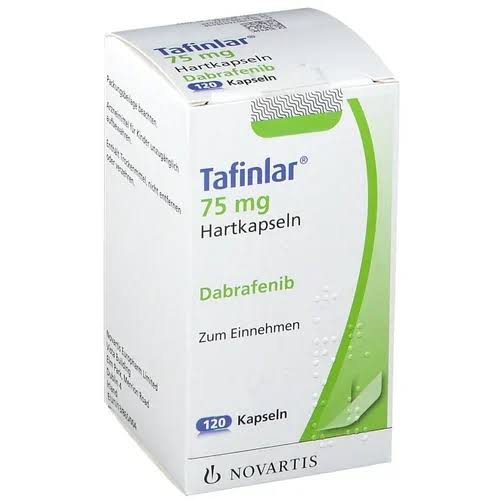
| Tafinlar | dabrafenib | Melanoma, BRAF | Capsule | US FDA |
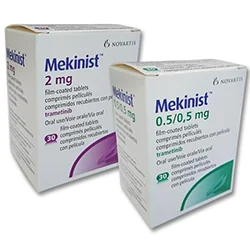
| Mekinist | trametinib | Melanoma, BRAF | Tablet | US FDA |
| Braftovi | encorafenib | Melanoma, BRAF | Capsule | US FDA |
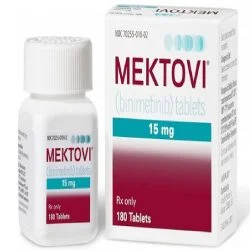
| Mektovi | binimetinib | Melanoma, BRAF | Tablet | US FDA |
| Zelboraf | vemurafenib | Melanoma, BRAF | Tablet | US FDA |
| Tunlametinib | tunlametinib | Melanoma, NRAS | Capsule | China NMPA |
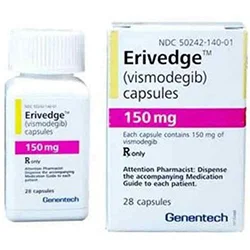
| Erivedge | vismodegib | Basal cell | Capsule | US FDA |
| Odomzo | sonidegib | Basal cell | Capsule | US FDA |
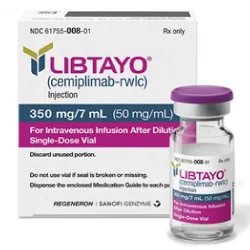
| Libtayo | cemiplimab | Basal cell, Squamous cell | IV infusion | US FDA |
| Poteligeo | mogamulizumab | Skin lymphoma (CTCL) | IV infusion | US FDA |
| Istodax | romidepsin | Skin lymphoma (CTCL) | IV infusion | US FDA |
| Zolinza | vorinostat | Skin lymphoma (CTCL) | Capsule | US FDA |
| Targretin | bexarotene | Skin lymphoma (CTCL) | Capsule | US FDA |
Reports your oncologist will look at
For several of these medicines, the approval depends on a specific test result, so the report usually comes before the prescription.
| Test or report | Why it matters | Medicines linked to it |
|---|---|---|
| BRAF V600 test on the tumour | V600E and V600K are different changes. Zelboraf, and Tafinlar on its own, are approved for V600E only; the tablet pairs are approved for V600E or V600K | Tafinlar + Mekinist, Braftovi + Mektovi, Zelboraf |
| NRAS mutation test | Needed before an NRAS-targeted MEK inhibitor | Tunlametinib |
| Stage and surgery report | Opdivo and the Tafinlar + Mekinist pair are also approved after complete removal of melanoma, at specific stages | Opdivo, Tafinlar + Mekinist |
| Surgery and radiation history | The BCC and CSCC approvals apply when surgery or radiation is not suitable, or after them in high-risk CSCC | Erivedge, Odomzo, Libtayo |
| Earlier hedgehog inhibitor treatment | Libtayo is approved for advanced BCC after a hedgehog inhibitor, or when one is not appropriate | Libtayo |
| Skin biopsy and blood test for CTCL | Confirms mycosis fungoides or Sézary syndrome and shows earlier treatments | Poteligeo, Istodax, Zolinza, Targretin |
Import papers, hospital delivery and paying for treatment
Each medicine here is brought in for one named patient. The patient applies to CDSCO on Form 12A, which our pharmacist prepares in the patient's name, and CDSCO then issues a Form 12B permit; our step-by-step Form 12A/12B guide lists the papers. Opdivo, Opdualag, Libtayo, Poteligeo and Istodax are infusions given in hospital, so we can send them straight to the treating hospital through our temperature-controlled hospital delivery.
Immunotherapy and targeted tablets are often taken for a year or longer. Our page on patient support and access programs explains which manufacturer programs, government schemes and charities may help with the cost.
How to get these melanoma and skin cancer medicines in India
Prescription
Your oncologist prescribes the medicine.
Share documents
Send the prescription and latest reports through Online Order.
Import paperwork
Our team checks the source and the import permissions.
Delivery
Delivered with the right storage, including cold chain.
Read How to Order and Indian import regulations. We also serve patients in Delhi NCR, Bangalore, Chennai, Mumbai, Kolkata and Hyderabad.
Has your oncologist prescribed one of these medicines?
Share the prescription and we will guide you on availability and next steps.
Read more about melanoma and skin cancer
References
- IARC Global Cancer Observatory. GLOBOCAN 2024 – India fact sheet (September 2026). https://gco.iarc.who.int/media/globocan/factsheets/populations/356-india-fact-sheet.pdf
- IARC Global Cancer Observatory. GLOBOCAN 2024 – Melanoma of skin fact sheet (July 2026). https://gco.iarc.who.int/media/globocan/factsheets/cancers/16-melanoma-of-skin-fact-sheet.pdf
- Biswas B et al. Not so 'rare' – an example of malignant melanoma in India: report from a tertiary cancer centre. Ecancermedicalscience. 2021;15:1335. https://pubmed.ncbi.nlm.nih.gov/35211204/
- Ahmad F et al. Molecular evaluation of BRAF V600 mutation in Indian malignant melanoma patients. Cancer Genet. 2019;231-232:46-53. https://pubmed.ncbi.nlm.nih.gov/30803557/
- Panda S. Nonmelanoma skin cancer in India: current scenario. Indian J Dermatol. 2010;55(4):373-8. https://pubmed.ncbi.nlm.nih.gov/21430894/
- US FDA prescribing information for each US-approved medicine (DailyMed). https://dailymed.nlm.nih.gov/dailymed/
This page gives general information only and does not replace medical advice. All medicines listed are prescription-only and must be used under a qualified oncologist.