Ikris Pharma
About Us Named Patient Program
Cities We Serve Contact Us
Surufatinib

Sourced directly from the authorized manufacturer network to ensure authenticity and quality.

Ready to proceed? Order Surufatinib on our secure patient portal to submit your prescription, upload documents and track your approval status.

Surufatinib

Supplied with complete CDSCO-approved import and customs documentation, including Form 12A & 12B, CDEC, GST Bill of Entry, Commercial Invoice, and Packing List.

Medicine Name: Surufatinib
Generic Name (API): Surufatinib
Dosage Form & Strength: 50 mg, 100 mg
Route: Oral
Drug Class: VEGFR / FGFR1 / CSF-1R tyrosine kinase inhibitor

Manufacturer / Innovator:

Hutchison MediPharma Limited (HUTCHMED)

Regulatory Approval:

  • NMPA (China)
Family enjoying life with Named Patient Program access

Your Trustworthy Partner For Named Patient Program

  • your trusted partner for named patient program

    Over a decade of trusted expertise in Named Patient Access to innovative and life-saving medicines.

  • 100% CDSCO-compliant processes ensuring safe, ethical, and responsible medicine access.

    100% CDSCO-compliant processes ensuring safe, ethical, and responsible medicine access.

  • Medicines sourced from authorized manufacturers with full batch traceability

    Medicines sourced from authorized manufacturers with full batch traceability.

  • EU-GDP Compliant Warehousing for secure, quality-controlled global distribution.

    EU-GDP compliant warehousing for secure, quality-controlled global distribution.

  • Temperature-Controlled Logistics for Safe and Timely Delivery

    Temperature-controlled logistics ensuring safe, reliable, and timely medicine delivery.

GDP Compliant View Certificate
Licensed Wholesale distributor View Certificate

What Is Surufatinib Used For?

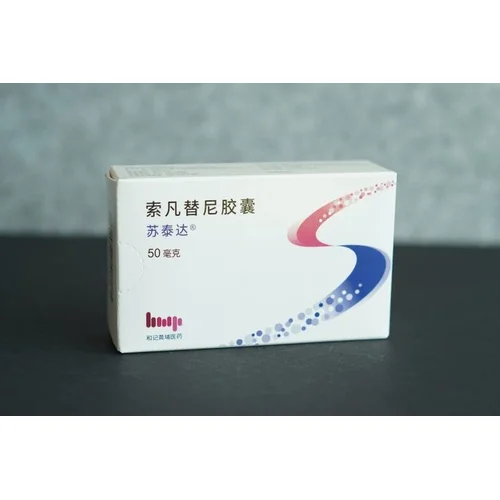
This is a once-daily capsule for people with advanced neuroendocrine tumours (NETs), slow-growing cancers that start in hormone-producing cells of the gut, pancreas, lungs and other organs. It was discovered and developed in China by HUTCHMED and is sold there as 苏泰达 (SULANDA®). The licence holder and maker is Hutchison MediPharma Limited in Shanghai (和记黄埔医药(上海)有限公司).

China's National Medical Products Administration (NMPA) first approved it in December 2020 for NETs arising outside the pancreas, and added NETs of the pancreas in June 2021. The current Chinese label covers both in a single use, as a medicine taken on its own:

  • Neuroendocrine tumours of pancreatic or non-pancreatic origin that are well differentiated (grade G1 or G2), non-functional, progressing, and either locally advanced and not removable by surgery or spread to other organs

"Non-functional" means the tumour is not releasing excess hormones that cause symptoms such as flushing or diarrhoea. An oncologist familiar with NETs decides whether it suits a given patient. More cancer treatments we help import are listed under our oncology medicines.

How It Works

Tumours need a blood supply to grow. The medicine blocks VEGFR1, 2 and 3 and FGFR1, receptors that drive the growth of new blood vessels, so the tumour is starved of that support. It also blocks CSF-1R, a receptor on a type of immune cell (tumour-associated macrophages) that helps cancers hide from the immune system. HUTCHMED describes this double action as "angio-immuno" kinase inhibition.

What the Trials Showed

Two phase 3 studies in China compared it with a placebo, each in patients whose NET was getting worse. Both were stopped early at a planned interim look because the main goal, time without the cancer growing (progression-free survival), had clearly been met.

  • SANET-ep (NCT02588170, 198 patients with NETs outside the pancreas): median progression-free survival 9.2 months versus 3.8 months, a 67% lower risk of progression or death (HR 0.334). Tumours shrank in 10.3% of treated patients.
  • SANET-p (NCT02589821, 172 patients with pancreatic NETs): median progression-free survival 10.9 months versus 3.7 months (HR 0.491). Tumours shrank in 19.2%, against 1.9% on placebo.

All patients in both studies were Chinese, and most had already received another cancer treatment.

Recommended Dosage

  • Usual dose: 300 mg by mouth once a day, every day, in 4-week cycles. That is six 50 mg capsules or three 100 mg capsules.
  • Food: take it on an empty stomach or with a low-fat meal (about 500 kcal, roughly 20% fat), at the same time each day, swallowing the capsules whole
  • Vomiting or a missed dose: do not take an extra dose; simply take the next one at the usual time
  • Dose steps: side effects are handled by pausing first, then restarting at 250 mg and then 200 mg a day. If 200 mg is still not tolerated, the doctor may use 200 mg for 3 weeks with 1 week off, or stop treatment.
  • Kidneys and liver: moderate kidney impairment roughly doubles blood levels, so the label lowers the dose to 150 mg once a day. It is not recommended with severe kidney or severe liver impairment.
  • How long: it continues until the disease progresses or side effects can no longer be tolerated

This information is not a treatment plan. For personalized medical advice, consult your doctor and refer to the full prescribing information.

Warnings and Precautions

Who should not take it: anyone allergic to an ingredient of the capsule; people with severe active bleeding, an active stomach or duodenal ulcer, or an unhealed perforation or fistula of the gut; and women who are pregnant or breastfeeding.

The label pools safety data from 718 people with advanced cancer who took 300 mg a day or more. Side effects seen in at least 1 in 5 included protein in the urine, high blood pressure, raised bilirubin, diarrhoea, low albumin, raised triglycerides, raised TSH, tiredness, tummy pain, swollen ankles, raised uric acid and bleeding. The main risks are:

  • High blood pressure: usually appears within about 2 weeks; 29.7% had severe (grade 3 or above) readings. Blood pressure should be brought below 140/90 mmHg before starting and checked regularly throughout.
  • Protein in the urine and kidney effects: usually within about 4 weeks; 14.5% had severe proteinuria. Urine and kidney blood tests are done before and during treatment, and the dose is lowered or paused if protein loss reaches 2 g a day.
  • Liver: bilirubin and liver enzymes can rise, most often around week 3; 12.8% had severe changes and one death from liver injury was reported. Liver tests are needed before starting, every two weeks for the first two months, then monthly.
  • Bleeding: mostly blood in the urine, gut bleeding or gum bleeding; 4.5% were severe, including bleeding in the brain, and some were fatal. Extra blood checks are needed for anyone on blood thinners or antiplatelet tablets. Seek help at once for black stools, vomiting blood or a sudden severe headache.
  • Other serious events: blood clots in arteries or veins, perforation of the gut (sudden severe tummy pain), slow wound healing, and rarely a brain swelling syndrome called PRES. Treatment is paused around planned surgery.
  • Thyroid: an underactive thyroid is very common, so thyroid tests are part of follow-up.

Other points: the liver enzyme CYP3A breaks it down, so strong or moderate blockers or boosters of that enzyme (found among some antifungals, antibiotics, tuberculosis and HIV medicines) should be avoided. It can also raise the levels of some other medicines, so share a full medicine list with the oncologist. Acid-reducing medicines can be used with it. It can harm an unborn baby: women should use effective contraception during treatment and for 1 month after, and men for 3 months after. It is not recommended under 18, and older adults start at the usual dose.

How to Access Surufatinib in India: A 6-Step Process

Step 1 – Search & request your medicine: The patient or treating doctor submits a request with basic details to initiate the access process.

Step 2 – Verification & eligibility review: The team verifies availability and reviews eligibility against regulatory and clinical requirements to ensure a compliant pathway.

Step 3 – Receive quote & delivery timeline: A transparent quotation is shared, covering medicine cost, logistics, and a clear delivery timeline.

Step 4 – Regulatory approval process: Assistance is provided to secure the approvals and documentation required for legal cross-border access.

Step 5 – Temperature-controlled import & handling: The medicine is sourced and transported under strict GDP-compliant conditions to maintain product integrity.

Step 6 – Secure delivery: The medicine is delivered to the patient or treating hospital, with updates provided at each stage.

Note: From request to delivery, every step is designed to ensure your treatment reaches you safely, compliantly, and without unnecessary delays.

Documentation & Availability

What documents are required to import Surufatinib to India?

The capsules are imported for one named patient, by the patient or a hospital, under India's rules for importing unapproved medicines. Please keep these ready:

  • A prescription from a medical oncologist stating the daily dose
  • The biopsy report confirming a well-differentiated (G1 or G2) neuroendocrine tumour and where it started
  • Recent scans showing the tumour is advanced and growing, with a note of earlier treatments
  • Recent blood pressure readings, a urine protein test, and liver and kidney blood tests
  • Government-issued photo ID of the patient

How is the order confirmed?

Once we have checked a valid prescription and, where required, the import permit has been issued.

Is Surufatinib available in India?

No. CDSCO has not approved it, so it is not stocked by Indian pharmacies. It is approved only in China. The US FDA declined approval in 2022, and the application to the European Medicines Agency was withdrawn the same year.

Patients can still obtain it through the Named Patient Program (NPP), which lets a medicine without Indian registration be imported for one person on a doctor's prescription. We also arrange other HUTCHMED medicines from China, including Elunate capsules for advanced bowel cancer and fanregratinib tablets.

It can be made available to patients, doctors, and hospitals across major cities in India, including Gurgaon, Delhi, Bangalore, Mumbai, Navi Mumbai, Thane, Hyderabad, Mysore, Kerala, Chennai, Coimbatore, Madurai, Kolkata, Ahmedabad, Surat, Vadodara, Pune, Nagpur, Nashik, Jaipur, Udaipur, Lucknow, Kanpur, Gorakhpur, Chandigarh, Mohali, Faridabad, Noida, Ghaziabad, Kochi, Trivandrum, Kozhikode, Thrissur, Kannur, Mangalore, Bhubaneswar, Patna, Ranchi, Raipur, Guwahati, Visakhapatnam, Vijayawada, Goa, Jammu, Srinagar, Dehradun, Bhopal, Indore, Ludhiana, Amritsar, and others — and can facilitate delivery to the patient's treating hospital. Orders are confirmed only after receipt of a valid doctor's prescription and an import permit, where applicable.

Sourcing & Delivery

NamedPatientProgram.com (NPP) sources this medicine through the manufacturer's authorised supply channels in China and arranges supply to patients, doctors, and hospitals under applicable legal provisions. The Chinese label asks for the capsules to be kept sealed at room temperature, so the boxes stay unopened in their blister packs and travel under temperature-controlled shipping that protects them from heat on the way. One box of either strength lasts a week at the standard 300 mg dose, so a 4-week cycle needs about four boxes, and we time each shipment so the next cycle arrives before the current one runs out. All prescriptions are dispensed and checked by registered pharmacists and dispatched from New Delhi, India, after legal requirements are fulfilled.

For the current cost in India and availability, contact NPP via WhatsApp at +91 98104 69557 | Toll-Free: 1800-1200-365 or email info@namedpatientprogram.com.

Availability Across Major Cities in India

Neuroendocrine tumours are often followed for years, so most families want a steady supply cycle after cycle. Once the oncologist's prescription and import papers are in order, the capsules can be sent to the cities below and many smaller towns.

Delhi

Oncologists in Delhi who manage NETs can send the biopsy report and prescription, and boxes usually reach the patient soon after dispatch from New Delhi.

Mumbai

For patients in Mumbai, we deliver to the home or to the hospital pharmacy where blood pressure and urine checks are done.

Bangalore

Families in Bangalore are told in advance which documents and tests are needed for each 4-week cycle, so nothing holds up the next supply.

Chennai

In Chennai, deliveries can be timed with the fortnightly liver tests needed during the first two months.

Hyderabad

Gastro-oncology teams in Hyderabad can request the capsules once scans confirm the tumour is growing.

Kolkata

Patients in Kolkata and eastern India can have each cycle couriered from Delhi, with tracking shared by message.

Pune

We help families in Pune keep supply continuous, since the capsules are taken every day without a planned break.

Ahmedabad

Doctors in Ahmedabad can share the pathology grade and treatment history, and we explain which papers are still needed.

Vellore

Patients reviewed at Vellore hospitals can have the parcel sent to the hospital ahead of their clinic visit.

Chandigarh

Oncologists in Chandigarh treating patients from Punjab, Haryana and Himachal can ask for supply before each scan review.

Lucknow

In Lucknow, families choose delivery to the home or to the cancer centre that monitors the blood pressure readings.

Kochi

For patients across Kerala, parcels can be sent to Kochi or to a town nearer home.

Access can also be coordinated for patients in other Indian cities, subject to a valid prescription and regulatory requirements.

Author Details

Nitin Goswami

Written By

Nitin Goswami

Deputy Manager – Content & Social Media, Ikris Pharma Network

Sources: NMPA • CDSCO

Dr. Chirag C Shah

Medically Reviewed By

Dr. Chirag C Shah

MBBS

Last Updated: 20 November 2026

More Oncology Medicines

TRUSTED BY HEALTHCARE PROFESSIONALS & HOSPITALS

Need Help
Accessing Medicines?

Our specialists are here to guide you through every step of the medicine access process.

Let's us help!

Send us a message

Read how to access medicines

Read More arrow icon

Frequently Asked
Questions

Read More
Meet the NPP Assistant: ask us anything about NPP