

Psoriasis Medicines in India: Imported Biologics and Tablets for Skin and Joints
Plaque, pustular and joint disease: which form is it?
Psoriasis is driven by an overactive immune signal, not by an infection, so it cannot pass from one person to another. The same disease can show up in quite different ways, and the form decides which medicines are approved.
| Form | What you see | Approved medicines on this page |
|---|---|---|
| Plaque psoriasis (psoriasis vulgaris) | Raised red or dark patches with silvery scale, often on elbows, knees, scalp and lower back | All nine plaque psoriasis medicines here are for moderate-to-severe disease in people who need whole-body treatment or light therapy |
| Psoriatic arthritis (PsA) | Painful, swollen joints, a whole finger or toe swollen like a sausage (dactylitis), heel or tendon pain, nail pitting | Bimzelx, Skyrizi, Sotyktu, Humira, Rinvoq and Orencia |
| Generalized pustular psoriasis (GPP) | Sudden widespread pus-filled spots on red skin, often with fever; needs hospital care | None of the medicines below is approved for GPP itself; treatment is decided by the hospital team |
| Scalp, nail, palm and sole psoriasis | Plaques in small but hard-to-treat places | Usually a pattern of plaque psoriasis; your dermatologist judges whether the overall disease is moderate to severe |
GPP is rare but not unknown in India. At PGIMER Chandigarh, 46 of 857 new psoriasis patients seen between March 2022 and March 2025 had the pustular form, about 5.3% [4].
What Indian research tells us about psoriasis
Large population surveys of psoriasis have not been done in India; the numbers we have come from hospital clinics [1]. Worldwide the picture is similar: a 2020 BMJ analysis found that 81% of countries have no data on how common psoriasis is [6]. Even so, Indian studies point to three things a patient should know.
- Joint damage is often missed. In the Chandigarh screening study, most people found to have psoriatic arthritis had not been told about it before [2]. Morning stiffness, a swollen finger or heel pain deserve a mention to your dermatologist.
- Heart and sugar risks travel with psoriasis. The Chennai study saw more metabolic syndrome, high triglycerides and raised blood sugar in people with psoriasis than in matched controls, and found no link between how severe the skin disease was and metabolic syndrome [3]. Regular checks of weight, sugar, lipids and blood pressure are part of good care.
- Tuberculosis screening matters more here. India carries one of the largest TB burdens in the world, estimated at 2.79 million cases in 2016 [5]. Many psoriasis medicines lower immune defences, so latent TB is looked for before they are started.
Imported psoriasis medicines by type
All 11 medicines below are prescription-only. Tap a type to filter. Each card opens the full medicine page with dosage, storage and safety details.

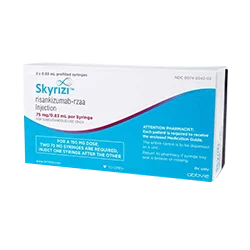

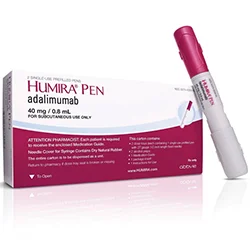


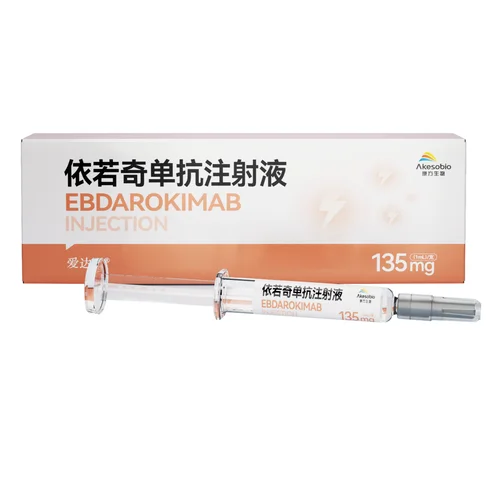
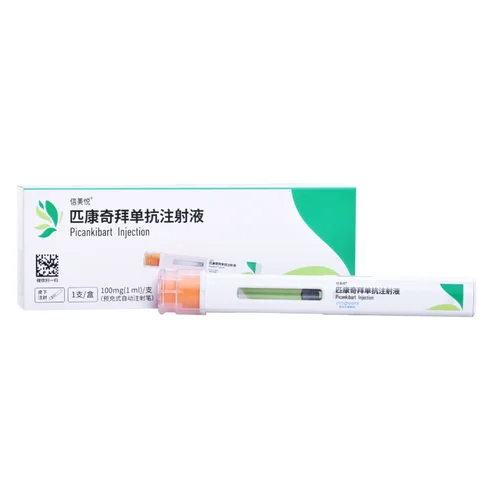
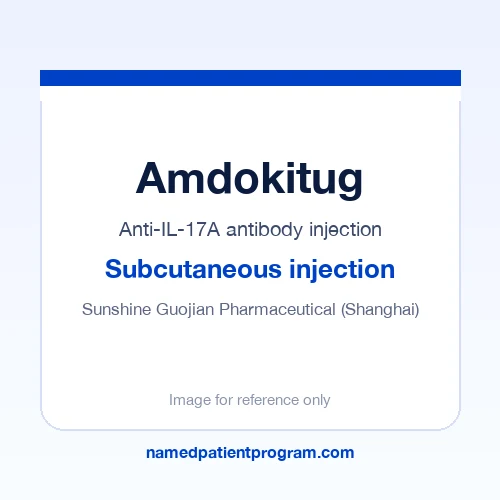
Compare all 11 psoriasis medicines
| Medicine | Generic name | Psoriasis type | Form | Approved by |
|---|---|---|---|---|
| Bimzelx | bimekizumab | Plaque psoriasis, Psoriatic arthritis | Subcutaneous pen | US FDA |
| Skyrizi | risankizumab | Plaque psoriasis, Psoriatic arthritis | Subcutaneous pen | US FDA |
| Sotyktu | deucravacitinib | Plaque psoriasis, Psoriatic arthritis | Tablet | US FDA |
| Humira | adalimumab | Plaque psoriasis, Psoriatic arthritis | Subcutaneous pen / syringe | US FDA |
| Rinvoq | upadacitinib | Psoriatic arthritis | Tablet | US FDA |
| Orencia | abatacept | Psoriatic arthritis | IV infusion / subcutaneous syringe | US FDA |
| Vunakizumab | vunakizumab | Plaque psoriasis | Subcutaneous pen / syringe | China NMPA |
| Xeligekimab | xeligekimab | Plaque psoriasis | Subcutaneous syringe | China NMPA |
| Ebdarokimab | ebdarokimab | Plaque psoriasis | Subcutaneous syringe | China NMPA |
| Picankibart | picankibart | Plaque psoriasis | Subcutaneous pen | China NMPA |
| Amdokitug | amdokitug | Plaque psoriasis | Subcutaneous injection | China NMPA |
How these psoriasis medicines differ from one another
All of them calm a specific immune messenger, but they differ in target, form and how often they are taken. Your dermatologist or rheumatologist weighs these against your other illnesses, earlier treatment and pregnancy plans.
| Group | Medicines here | How it is taken (as per the label or our drug page) |
|---|---|---|
| IL-17 blockers | Bimzelx (IL-17A and IL-17F), Vunakizumab, Xeligekimab, Amdokitug | Injection under the skin; for plaque psoriasis, Bimzelx 320 mg is given five times four weeks apart (weeks 0 to 16) and then once in eight weeks |
| IL-23 blockers | Skyrizi, Picankibart | Injection under the skin; adult Skyrizi dosing is 150 mg at the start, again four weeks later, and after that once in 12 weeks |
| IL-12/23 blocker | Ebdarokimab | Injection under the skin; after two starting doses, once every 12 weeks |
| TYK2 inhibitor | Sotyktu | One 6 mg tablet a day, with or without food |
| TNF blocker | Humira | Injection under the skin; for plaque psoriasis it is meant for when other whole-body treatments are less suitable |
| JAK inhibitor | Rinvoq | Tablet once a day; for psoriatic arthritis after one or more TNF blockers did not work or were not tolerated |
| T-cell co-stimulation modulator | Orencia | Drip in hospital or injection under the skin; for psoriatic arthritis only |
Tests usually done before the first dose
- TB check: the US labels of Bimzelx, Humira, Rinvoq and Sotyktu ask doctors to look for TB infection before treatment; for Skyrizi the label leaves it to clinical judgement.
- Infection and hepatitis checks: Humira and Rinvoq carry a boxed warning about serious infections, and the Humira, Rinvoq and Orencia labels all discuss hepatitis B, so your doctor may order hepatitis and blood tests first.
- Severity record: a PASI score or body-surface-area note from your dermatologist, and for joint disease, a rheumatologist's assessment, show that the approval criteria are met.
- Vaccines: the US labels of all six US-approved medicines here say to avoid live vaccines during treatment, so ask about any pending vaccination before starting.
Import permission, cold-chain delivery and paying for long treatment
Because these medicines are not on Indian pharmacy shelves, each pack is imported against one patient's name. Form 12A goes to CDSCO in the patient's own name after our pharmacist has drafted it, the import is then allowed through a Form 12B permit, and the rule behind this is set out on our Indian import regulations page; the documents needed are listed on our Form 12A and 12B guide. Bimzelx, Skyrizi, Humira and Orencia must be kept at 2–8 °C according to their US labels, so packs travel in a monitored cold box to the hospital pharmacy named in the permit, as explained on our hospital delivery page.
Psoriasis treatment with a biologic or tablet usually continues for months or years. Company programs, government schemes and charities that may ease the long-term cost are explained where we cover help with treatment costs.
How to get these psoriasis medicines in India
Prescription
Your doctor prescribes the medicine.
Share documents
Send the prescription and latest reports through Online Order.
Import paperwork
Our team checks the source and the import permissions.
Delivery
Delivered with the right storage, including cold chain.
Read How to Order and Indian import regulations. We also serve patients in Delhi NCR, Bangalore, Chennai, Mumbai, Kolkata, Hyderabad and Pune.
Has your doctor prescribed one of these medicines?
Share the prescription and we will guide you on availability and next steps.
Read more about psoriasis
References
- Thappa DM, Munisamy M. Research on psoriasis in India: where do we stand? Indian J Med Res. 2017;146(2):147-149. https://pubmed.ncbi.nlm.nih.gov/29265013/
- Kumar R, Sharma A, Dogra S. Prevalence and clinical patterns of psoriatic arthritis in Indian patients with psoriasis. Indian J Dermatol Venereol Leprol. 2014;80(1):15-23. https://pubmed.ncbi.nlm.nih.gov/24448118/
- Madanagobalane S, Anandan S. Prevalence of metabolic syndrome in South Indian patients with psoriasis vulgaris: a hospital-based case-control study. Indian J Dermatol. 2012;57(5):353-7. https://pubmed.ncbi.nlm.nih.gov/23112353/
- Dogra S et al. Epidemiology, disease characteristics and treatment outcomes of generalized pustular psoriasis in India. Clin Exp Dermatol. 2026;51(4):571-577. https://pubmed.ncbi.nlm.nih.gov/41229319/
- Sarkar S et al. Risk of tuberculosis with anti-TNF-alpha therapy in patients with psoriasis and psoriatic arthritis in Indian population. Indian J Dermatol Venereol Leprol. 2020;86(1):1-7. https://pubmed.ncbi.nlm.nih.gov/31719235/
- Parisi R et al. National, regional, and worldwide epidemiology of psoriasis: systematic analysis and modelling study. BMJ. 2020;369:m1590. https://pubmed.ncbi.nlm.nih.gov/32467098/
- US FDA prescribing information for each US-approved medicine (DailyMed). https://dailymed.nlm.nih.gov/dailymed/
This page gives general information only and does not replace medical advice. All medicines listed are prescription-only and must be used under a qualified doctor.