

Medicines for Serious Infections in India: Imported Options for Resistant and Transplant Infections
Which infections this page is about
"Serious infection" can mean many things. On this page it means two groups of patients that Indian hospital doctors meet every week. The first group has a bacterial infection, usually picked up in hospital, that no longer responds to the antibiotics on the ward shelf. The second group has a weakened immune system, most often after a bone marrow (stem cell) transplant, a kidney transplant or advanced HIV, and is fighting a germ that a healthy body would keep in check.
| Infection | Who is usually affected | Imported medicines on this page |
|---|---|---|
| Pneumonia or urinary infection from resistant Gram-negative bacteria (Acinetobacter, Klebsiella, Pseudomonas, E. coli) | Patients on a ventilator, in ICU, after surgery or with a urinary catheter | Fetcroja (cefiderocol), Xacduro (sulbactam + durlobactam) |
| Clostridioides difficile (C. difficile) diarrhoea | People who recently took antibiotics, older patients, long hospital stays | Dificid (fidaxomicin) |
| Cytomegalovirus (CMV) | Stem cell and kidney transplant recipients; people with AIDS (CMV of the eye) | Prevymis (letermovir), Livtencity (maribavir), Foscavir (foscarnet) |
| Herpes simplex that resists acyclovir | People whose immunity is weakened | Foscavir (foscarnet) |
| Pneumocystis pneumonia (PCP) | People with HIV and a low CD4 count, and others on strong immune-lowering treatment | Pentacarinat (pentamidine) |
What Indian hospital data shows
India has no single register of drug-resistant infections, but several large multi-hospital studies point the same way.
- Resistance is the norm in ICU bloodstream infections. Between May 2017 and October 2018, 26 tertiary hospitals reported 2,622 bloodstream and 737 urinary infections caught in 89 ICUs. Klebsiella was the most frequent germ in the blood (24.8%). Carbapenems failed against 77% of Acinetobacter, 72% of Klebsiella and 64% of Pseudomonas bloodstream infections [1].
- Sepsis remains deadly. The SEPSIS INDIA registry followed 1,172 adults across 19 ICUs from August 2022 to July 2023. About two in three positive cultures grew Gram-negative bacteria, half of the Gram-negative blood isolates were carbapenem-resistant, and the hospital death rate was 36.3% [2]. Lungs were the most common source of infection.
- Multidrug resistance is everyday ICU work. On a single survey day in 35 Indian ICUs, 382 of 677 adults had sepsis, about 45% of their infections involved multidrug-resistant organisms, and 14.1% were fungal [3].
- CMV is almost universal before transplant. At a Kolkata cancer centre, 99% of transplant patients and 94% of donors already carried CMV; the virus became active again in 43.8% of 130 patients, at a median of 118 days after transplant [4]. A Navi Mumbai centre saw CMV reactivation in 80.5% of unrelated-donor and half-matched (haploidentical) transplants [5].
- C. difficile is under-tested. A review of 31 Indian studies put the share of C. difficile infection at between 3.4% and 18% of patients tested, with recent antibiotics, long admissions, surgery and acid-reducing tablets as the common risk factors [6].
Worldwide, about 1.27 million deaths in 2019 were directly caused by bacteria that resisted treatment, according to the Global Burden of Disease analysis [7].
When a specialist may ask for an imported medicine
These medicines are not first choices. Infectious disease specialists usually keep them for the moment when the culture report, the viral load or the patient's condition shows that standard treatment is not enough. The approval of each one is narrow, and the table below follows the wording of the current labels, for example those of Fetroja [8], Xacduro [9], Prevymis [10] and Livtencity [11].
| What the reports show | Medicine approved for it |
|---|---|
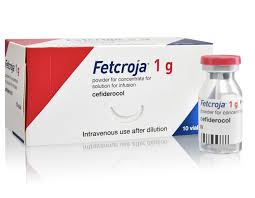
| Complicated urinary infection or hospital / ventilator pneumonia in an adult, caused by a susceptible Gram-negative germ | Fetcroja (sold in the US as Fetroja) |
| Hospital or ventilator pneumonia in an adult, caused by susceptible Acinetobacter baumannii-calcoaceticus complex only | Xacduro |
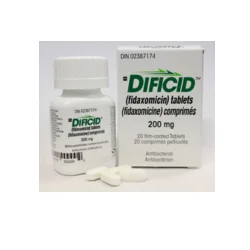
| C. difficile diarrhoea in an adult or a child aged 6 months or more | Dificid |
| Preventing CMV in a CMV-positive adult or child after an allogeneic stem cell transplant, or in a high-risk kidney transplant (donor positive, recipient negative) | Prevymis |
| CMV after a transplant that has not cleared with ganciclovir, valganciclovir, cidofovir or foscarnet | Livtencity |
| CMV retinitis in AIDS, or acyclovir-resistant skin and mucosal herpes in an immunocompromised patient | Foscavir |
| Treating Pneumocystis pneumonia (PCP) with an injection or drip | Pentacarinat |
Imported serious infections medicines by type
All 7 medicines below are prescription-only. Tap a type to filter. Each card opens the full medicine page with dosage, storage and safety details.



Compare all 7 serious infections medicines
| Medicine | Generic name | Serious infections type | Form | Approved by |
|---|---|---|---|---|
| Fetcroja | cefiderocol | Resistant bacteria | IV infusion | EMA (Europe), US FDA (as Fetroja) |
| Xacduro | sulbactam + durlobactam | Resistant bacteria | IV infusion | US FDA |
| Dificid | fidaxomicin | C. difficile | Tablet | US FDA |
| Prevymis | letermovir | CMV | Tablet | US FDA, EMA (Europe) |
| Livtencity | maribavir | CMV | Tablet | US FDA, EMA (Europe) |
| Foscavir | foscarnet | CMV, Herpes (HSV) | IV infusion | US FDA |
| Pentacarinat | pentamidine isetionate | Pneumocystis (PCP) | Injection | MHRA (UK), ANSM (France) |
Reports that decide which medicine fits
| Report | Why it matters | Medicines it applies to |
|---|---|---|
| Culture with sensitivity (antibiogram) from blood, urine, tracheal aspirate or BAL | Names the germ and shows which antibiotics still work against it; both antibacterial labels limit use to susceptible isolates | Fetcroja, Xacduro |
| Kidney function (creatinine clearance) | The dose of several of these medicines changes with kidney function, and foscarnet itself can harm the kidneys | Fetcroja, Xacduro, Foscavir |
| Stool test for C. difficile toxin or toxin gene | Confirms that diarrhoea is caused by C. difficile and not by another cause | Dificid |
| CMV antibody status (donor and recipient) and CMV DNA (PCR) load | Antibody status decides who needs prevention; a viral load that does not fall on treatment points to refractory CMV | Prevymis, Livtencity, Foscavir |
| Sputum or BAL test for Pneumocystis, and CD4 count in HIV | Confirms PCP and shows how weak the immune system is | Pentacarinat |
When the need is urgent: what families can do
A patient on a ventilator cannot wait long, so it helps to start the paperwork as soon as the specialist mentions one of these names. Each import needs the patient's own application to CDSCO and a permit in the patient's name before the medicine can be shipped. Our team prepares the forms with you; the steps and documents are listed on our import permit guide.
Fetcroja and Xacduro vials have to be kept between 2 °C and 8 °C before use, so they go straight to the hospital pharmacy in a cold box with temperature records; see how hospital delivery works. Dificid, Prevymis and Livtencity tablets are stored at room temperature.
The legal basis for importing a medicine missing from the Indian market is explained on our Indian import rules page. Transplant patients often need CMV prevention for 100 days or longer, so ask early about manufacturer and charity support programs.
Why doctors keep these medicines in reserve
Every bacterium that survives an antibiotic can pass on its survival trick. For that reason the US labels of Fetroja, Xacduro and Dificid all ask doctors to use them only when there is good reason to believe bacteria (for Dificid, C. difficile) are behind the infection. Your hospital may also have an antibiotic stewardship team that reviews such requests. If your doctor says one of these medicines is not needed yet, that is usually a deliberate choice to keep it working for later.
How to get these serious infections medicines in India
Prescription
Your doctor prescribes the medicine.
Share documents
Send the prescription and latest reports through Online Order.
Import paperwork
Our team checks the source and the import permissions.
Delivery
Delivered with the right storage, including cold chain.
Read How to Order and Indian import regulations. We also serve patients in Delhi NCR, Bangalore, Chennai, Mumbai, Kolkata, Hyderabad and Pune.
Has your doctor prescribed one of these medicines?
Share the prescription and we will guide you on availability and next steps.
Read more about serious infections
References
- Mathur P et al. Health-care-associated bloodstream and urinary tract infections in a network of hospitals in India: a multicentre, hospital-based, prospective surveillance study. Lancet Glob Health. 2022;10(9):e1317-e1325. https://pubmed.ncbi.nlm.nih.gov/35961355/
- Todi S et al. A multicentre prospective registry of one thousand sepsis patients admitted in Indian ICUs (SEPSIS INDIA) study. Crit Care. 2024;28(1):375. https://pubmed.ncbi.nlm.nih.gov/39563464/
- Hammond NE et al. Estimates of sepsis prevalence and outcomes in adult patients in the ICU in India: a cross-sectional study. Chest. 2022;161(6):1543-1554. https://pubmed.ncbi.nlm.nih.gov/35092747/
- Kumar M et al. Cytomegalovirus reactivation and disease amongst patients with allogeneic haematopoietic stem cell transplantation in Eastern India. Indian J Med Microbiol. 2018;36(1):49-53. https://pubmed.ncbi.nlm.nih.gov/29735826/
- Gokarn A et al. Incidence, risk factors, and outcomes of viral reactivations in alternative donor hematopoietic stem cell transplants. Blood Cell Ther. 2025;8(4):290-300. https://pubmed.ncbi.nlm.nih.gov/41368191/
- Ghia CJ et al. Systematic literature review on burden of Clostridioides difficile infection in India. Clin Pathol. 2021;14:2632010X211013816. https://pubmed.ncbi.nlm.nih.gov/34104883/
- Antimicrobial Resistance Collaborators. Global burden of bacterial antimicrobial resistance in 2019: a systematic analysis. Lancet. 2022;399(10325):629-655. https://pubmed.ncbi.nlm.nih.gov/35065702/
- Fetroja (cefiderocol) US prescribing information, DailyMed. https://dailymed.nlm.nih.gov/dailymed/drugInfo.cfm?setid=75c0c785-38e0-4049-a6fb-b77581f5b35c
- Xacduro (sulbactam; durlobactam) US prescribing information, DailyMed. https://dailymed.nlm.nih.gov/dailymed/drugInfo.cfm?setid=c0167aec-a89d-4e96-afe5-2ccf3e89fe72
- Prevymis (letermovir) US prescribing information, DailyMed. https://dailymed.nlm.nih.gov/dailymed/drugInfo.cfm?setid=1b49df80-be4f-47e0-a0b7-123f3e69395b
- Livtencity (maribavir) US prescribing information, DailyMed. https://dailymed.nlm.nih.gov/dailymed/drugInfo.cfm?setid=c94fc2c5-e840-4f18-b7d8-d5eacb26d3a0
This page gives general information only and does not replace medical advice. All medicines listed are prescription-only and must be used under a qualified doctor.