

Obesity Medicines in India: Imported Weekly Injections for Weight Management
What counts as obesity, and why the Indian cut-off is lower
Body mass index (BMI) is weight in kilograms divided by height in metres squared. It is quick, but it cannot tell fat from muscle and it misses fat stored inside the abdomen, which does the most metabolic harm. Indian bodies tend to hold a higher share of fat at the same BMI, which is why an expert consensus for Asian Indians set lower limits back in 2009 and estimated that an extra 10–15% of the population would then be counted as overweight or obese [2].
In January 2025 a group of Indian experts updated that guidance into two stages [1]:
| Stage (India, 2025) | What it means | What usually follows |
|---|---|---|
| Stage 1 obesity | BMI above 23 kg/m², with no effect yet on organs or on daily activities | Diet, activity and regular checks |
| Stage 2 obesity | BMI above 23 plus a large waist or high waist-to-height ratio, together with a weight-related illness or trouble with everyday tasks | Active treatment, which may include medicine or surgery |
A Lancet commission published the same month makes a similar split worldwide, between "preclinical" and "clinical" obesity, and says BMI alone should not be used to label an individual; waist or body-fat measurement should back it up [7].
What Indian surveys show
- A national picture. ICMR-INDIAB-17 measured 113,043 people in urban and rural areas between 2008 and 2020. Besides the obesity figures above, it found diabetes in 11.4% and high blood pressure in 35.5% of adults, conditions that often travel with excess weight [4].
- Rising among young adults. The NFHS-5 household survey shows that a third of urban women aged 15–49 (33.2%) and 29.8% of urban men had a BMI of 25 or more. A high-risk waist-to-hip ratio was even more common: 56.7% of women and 47.7% of men [5].
- Worldwide. The WHO counts 1.1 billion people living with obesity in 2024, about 1 in 7, and says the share of adults with obesity worldwide is now more than twice the 1990 level [3].
- Doctors see the gap in access. In the 2026 South Asian survey, after cost, the next barriers to the newer medicines were worry about side effects (46.2%) and patients not staying on treatment (41.3%) [6].
How the imported injections work
All three medicines on this page copy GLP-1, a hormone the gut releases after a meal that tells the brain you are full and slows the stomach. Each adds something different:
An Indian review published in 2026 notes that the January 2025 Indian guideline asks doctors to think about medicine earlier, matched to the stage of obesity [8].
| Medicine | Hormone targets | Approval for weight | Key weight trial |
|---|---|---|---|
| Zepbound (tirzepatide) | GIP and GLP-1 | US FDA, adults in the obese BMI range, or overweight adults who also have a weight-linked illness; also sleep apnoea with obesity | Study 1: 2,539 adults without diabetes, 72 weeks [9] |
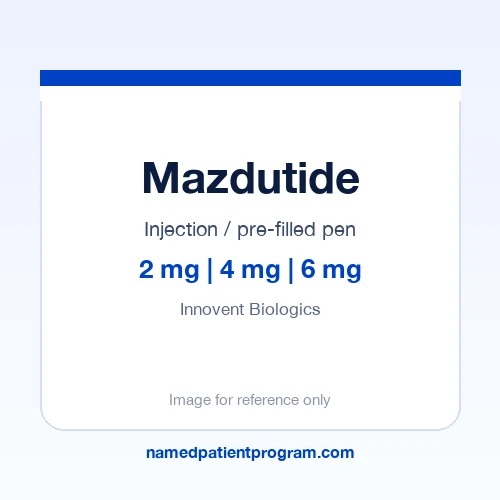
| Mazdutide | GLP-1 and glucagon | China NMPA, June 2025 | GLORY-1: 610 Chinese adults, average loss of 11.0% on the 4 mg dose and 14.0% on 6 mg after 48 weeks, while the placebo group gained 0.3% [10] |
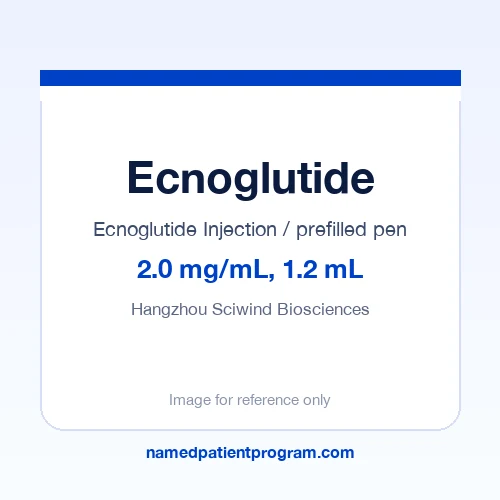
| Ecnoglutide | GLP-1 (signal-biased) | China NMPA, March 2026 | SLIMMER: 664 Chinese adults, weight down 9.1% to 13.2% at 40 weeks vs a 0.1% gain on placebo [11, 12] |
The two Chinese trials enrolled people with a BMI of 28 or more, or 24 or more with a weight-related problem, which is closer to the Indian body type than most Western studies. The same tirzepatide is sold as Mounjaro for type 2 diabetes; if blood sugar is your main problem, see our Mounjaro page instead.
Imported obesity medicines by type
All 3 medicines below are prescription-only. Tap a type to filter. Each card opens the full medicine page with dosage, storage and safety details.

Compare all 3 obesity medicines
| Medicine | Generic name | Obesity type | Form | Approved by |
|---|---|---|---|---|
| Zepbound | tirzepatide | GIP and GLP-1 | Pre-filled pen (once weekly) | US FDA |
| Mazdutide | mazdutide | GLP-1 and glucagon | Pre-filled pen (once weekly) | China NMPA |
| Ecnoglutide | ecnoglutide | Biased GLP-1 | Pre-filled pen (once weekly) | China NMPA |
Checks your doctor will want first
| Check | Why it matters |
|---|---|
| Weight, height, waist and BMI | Confirms the stage of obesity and gives a starting point to measure progress |
| HbA1c or fasting sugar, lipids, liver tests, blood pressure | Finds diabetes, fatty liver or cholesterol problems that change which medicine fits |
| Personal or family history of thyroid cancer | The Zepbound label carries a boxed warning because thyroid C-cell tumours appeared in rat studies and rules out anyone who has had medullary thyroid cancer, anyone whose close family has had it, and anyone with MEN 2 syndrome [9] |
| Pregnancy plans and contraception | The Zepbound label says to stop if pregnancy is found and asks women on the pill to add a barrier method for 4 weeks after starting and after each dose step [9] |
| Pancreas and gallbladder history | The Zepbound label lists acute pancreatitis and gallbladder disease among its warnings, so past attacks or gallstones need to be mentioned [9] |
Slow dose steps, food and activity still count
Each of these injections starts low and is raised every few weeks, because stomach upsets such as nausea, vomiting, diarrhoea or constipation are the side effects reported most often, mainly in the early weeks [9, 10]. Every approval on this page assumes the patient is also eating fewer calories and moving more; the medicine helps, but it does not replace those steps. The Zepbound approval itself is worded for keeping weight off long term, and its longest study ran for 88 weeks [9], so plan the course with your doctor as ongoing care, not a short fix.
Permit, cold storage and paying for treatment
These are prescription pens, not something to order online. Every import is tied to one patient by name. The Form 12A application to CDSCO belongs to the patient, prepared for them by our pharmacist, and nothing is shipped until CDSCO grants the Form 12B permit. What each form asks for is set out in our import permit guide.
The Zepbound label asks for refrigeration at 2–8 °C, with short spells unrefrigerated allowed [9], and the Mazdutide pens also need 2–8 °C. Our hospital delivery service keeps the pens cold all the way, with a data logger recording the temperature, until they reach the treating hospital's pharmacy. Because weight treatment runs for many months, ask about patient support and access programs before you start.
How to get these obesity medicines in India
Prescription
Your doctor prescribes the medicine.
Share documents
Send the prescription and latest reports through Online Order.
Import paperwork
Our team checks the source and the import permissions.
Delivery
Delivered with the right storage, including cold chain.
Read How to Order and Indian import regulations. We also serve patients in Delhi NCR, Bangalore, Chennai, Mumbai, Kolkata, Hyderabad and Pune.
Has your doctor prescribed one of these medicines?
Share the prescription and we will guide you on availability and next steps.
Read more about obesity
References
- Misra A et al. Revised definition of obesity in Asian Indians living in India. Diabetes Metab Syndr. 2025;19(1):102989. https://pubmed.ncbi.nlm.nih.gov/39814628/
- Misra A et al. Consensus statement for diagnosis of obesity, abdominal obesity and the metabolic syndrome for Asian Indians. J Assoc Physicians India. 2009;57:163-70. https://pubmed.ncbi.nlm.nih.gov/19582986/
- World Health Organization. Obesity and overweight – fact sheet. https://www.who.int/news-room/fact-sheets/detail/obesity-and-overweight
- Anjana RM et al. Metabolic non-communicable disease health report of India: the ICMR-INDIAB national cross-sectional study (ICMR-INDIAB-17). Lancet Diabetes Endocrinol. 2023;11(7):474-489. https://pubmed.ncbi.nlm.nih.gov/37301218/
- Ministry of Health and Family Welfare. National Family Health Survey (NFHS-5) 2019-21, India fact sheet. https://dhsprogram.com/pubs/pdf/OF43/India_National_Fact_Sheet.pdf
- Agarwal K et al. Perspectives on newer antiobesity drugs (semaglutide and tirzepatide) among healthcare professionals treating obesity in South Asia. J Assoc Physicians India. 2026;74(9):67-70. https://pubmed.ncbi.nlm.nih.gov/42902646/
- Rubino F et al. Definition and diagnostic criteria of clinical obesity. Lancet Diabetes Endocrinol. 2025;13(3):221-262. https://pubmed.ncbi.nlm.nih.gov/39824205/
- Atal S et al. Pharmacological management of obesity: current landscape and emerging therapies. Indian J Pharmacol. 2026;58(5):505-512. https://pubmed.ncbi.nlm.nih.gov/42683980/
- US FDA prescribing information for Zepbound (tirzepatide), DailyMed. https://dailymed.nlm.nih.gov/dailymed/drugInfo.cfm?setid=487cd7e7-434c-4925-99fa-aa80b1cc776b
- Ji L et al. Once-weekly mazdutide in Chinese adults with obesity or overweight (GLORY-1). N Engl J Med. 2025;392(22):2215-2225. https://pubmed.ncbi.nlm.nih.gov/40421736/
- Efficacy and safety of a biased GLP-1 receptor agonist ecnoglutide in adults with overweight or obesity (SLIMMER). Lancet Diabetes Endocrinol. 2025;13(9):777-789. https://pubmed.ncbi.nlm.nih.gov/40555243/
- Shirley M. Ecnoglutide: first approvals. Drugs. 2026;86(9):1563-1570. https://pubmed.ncbi.nlm.nih.gov/42412371/
This page gives general information only and does not replace medical advice. All medicines listed are prescription-only and must be used under a qualified doctor.