

Rheumatoid Arthritis Medicines in India: Imported Biologics and JAK Inhibitors
What rheumatoid arthritis does to the body
In RA, white cells settle in the thin membrane (synovium) that lines each joint. The membrane thickens and releases chemical messengers such as TNF-alpha and interleukin-1, which keep the joint warm, swollen and stiff. Over months this erodes the bone edges, and the damage shows up on X-rays. Because the immune attack is body-wide, some people also get tiredness, low-grade fever, anaemia, dry eyes, nodules under the skin or lung scarring.
Three features help a doctor tell RA apart from the common wear-and-tear arthritis (osteoarthritis):
- Morning stiffness that lasts more than about half an hour and eases with movement.
- Small joints on both sides: knuckles, wrists and the balls of the feet, usually in a matching pattern.
- Blood markers: rheumatoid factor (RF), anti-CCP antibodies and raised ESR or CRP.
What Indian studies tell us about RA
RA is less common in India than knee osteoarthritis, but its effect on work and family income is large. Key findings from Indian research:
- How many people have it. In the COPCORD-BJD India project, trained paramedics visited homes at 12 sites and rheumatologists examined everyone who reported joint pain. RA was found in 0.34% of the population screened, against 4.39% for osteoarthritis [1]. Earlier COPCORD work around Pune found 0.5% in the village of Bhigwan and 0.2% in urban Pune [5].
- Who treats it first. In a Delhi rheumatology clinic, 73.4% of 316 patients had seen an orthopaedic surgeon before reaching a rheumatologist and 62% had tried alternative medicine. Only 1 patient (0.3%) had received a biologic before that first visit, and 84% arrived with moderate or high disease activity [6].
- Diagnosis is getting faster, but not fast enough. At a Kochi centre, the median delay to diagnosis fell from 36 months in 2012 to 10 months in 2021. Most patients still missed the first three months, the period when treatment protects joints best [2].
- The cost falls on families. In the Tamil Nadu study, 88.1% of patients were women. Out-of-pocket spending on RA averaged ₹40,698 per household, and just over half of households crossed the catastrophic-spending line [3].
Worldwide, the Global Burden of Disease study estimated 17.6 million people were living with RA in 2020, with women affected about 2.45 times as often as men after adjusting for age [7].
Where imported RA medicines fit in treatment
Treatment usually starts with conventional DMARD tablets such as methotrexate or hydroxychloroquine, sometimes with sulfasalazine or leflunomide, while steroids are used to settle flares. The Delhi clinic study found that skipping methotrexate, or using too low a dose, was the main reason disease stayed active [6]. Medicines on this page are usually considered when that first step is not enough:
| Drug class | How it calms RA | Medicine on this page | How it is given |
|---|---|---|---|
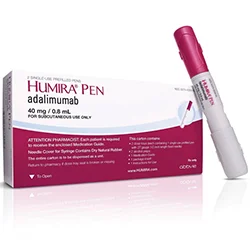
| TNF blocker | Blocks TNF-alpha, one of the main signals that keeps the joint inflamed | Humira (adalimumab) | Injection under the skin, usually every other week |
| T-cell costimulation modulator | Stops T cells from getting the second signal they need to switch on | Orencia (abatacept) | Drip into a vein every 4 weeks after starting doses, or a weekly injection under the skin |
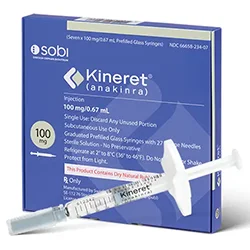
| IL-1 receptor blocker | Occupies the interleukin-1 receptor so the signal cannot get through | Kineret (anakinra) | Daily injection under the skin |
| JAK inhibitor | Turns down the JAK1 enzyme that passes many inflammatory signals inside immune cells | Rinvoq (upadacitinib), Ivarmacitinib | One tablet a day |
Rinvoq's US approval and Ivarmacitinib's China approval are both for RA that has not responded to, or could not be tolerated with, at least one TNF blocker. Kineret's label asks that it not be combined with a TNF blocker, and the Orencia label advises against using it together with other biologics or JAK inhibitors.
Imported rheumatoid arthritis medicines by type
All 5 medicines below are prescription-only. Tap a type to filter. Each card opens the full medicine page with dosage, storage and safety details.


Compare all 5 rheumatoid arthritis medicines
| Medicine | Generic name | Rheumatoid arthritis type | Form | Approved by |
|---|---|---|---|---|
| Humira | adalimumab | TNF blocker | Pre-filled pen / syringe | US FDA |
| Orencia | abatacept | T-cell modulator | IV infusion / pre-filled syringe | US FDA |
| Kineret | anakinra | IL-1 blocker | Pre-filled syringe | US FDA |
| Rinvoq | upadacitinib | JAK inhibitor | Extended-release tablet | US FDA |
| Ivarmacitinib | ivarmacitinib | JAK inhibitor | Tablet | China NMPA |
Checks your rheumatologist will want before starting
Biologics and JAK inhibitors lower part of the immune defence, so screening matters, especially in India where tuberculosis is common.
| Check | Why it is done | Medicines it applies to |
|---|---|---|
| Latent TB screening (Mantoux skin test and/or IGRA blood test) | Humira and Rinvoq carry boxed warnings for serious infections, including TB that wakes up from a hidden, latent state. Latent TB is treated first. | Humira, Rinvoq; the Orencia label also asks for TB screening |
| Hepatitis B and C tests | Immune-lowering treatment can reactivate hidden hepatitis B | Humira, Orencia, Rinvoq (named in their labels) |
| Blood count, liver and kidney tests, lipids | Baseline values for follow-up. Kineret needs a neutrophil count first and is given every other day when kidney function is badly reduced; Rinvoq is monitored for blood counts, liver enzymes and lipids | Kineret, Rinvoq |
| Heart, clot and cancer history; smoking status | The Rinvoq label has a boxed warning covering deaths, cancers, serious heart problems and clots, based on a study of RA patients aged 50 or older with at least one heart risk factor who took another JAK inhibitor | Rinvoq |
| Vaccines up to date | Live vaccines are avoided once these medicines start | Humira, Orencia, Kineret, Rinvoq |
The Delhi TB study showed why a single skin test may not be enough: with standard testing only 13.6% of RA patients were positive, but adding a stronger skin test and a Quantiferon blood test raised it to 43% [4].
Daily life alongside the medicines
- Stop smoking. Long-term smoking raises the chance of getting RA and is tied to more severe disease.
- Keep joints moving. A physiotherapist can teach range-of-motion and strengthening routines that protect the hands and knees.
- Report fever or a cough that will not go away while on a biologic or JAK inhibitor; the doctor may pause the dose until an infection is ruled out.
- Plan for pregnancy. Some RA medicines have to be changed before trying for a baby, so tell your rheumatologist early.
Import, cold chain and cost notes
Humira, Orencia and Kineret are proteins that, as per their labels, must be kept cold at 2–8 °C, so NPP ships them in validated cold boxes with a temperature logger and hands them to the hospital pharmacy; details are on our hospital delivery page. The tablets travel at room temperature.
Each import needs a permit in the patient's own name. The patient signs a Form 12A application to CDSCO, our pharmacist puts the papers together, and once CDSCO grants Form 12B the order is placed. The Form 12A and 12B guide lists what you need.
RA treatment usually runs for years, and the Tamil Nadu study shows how heavily it falls on household budgets [3]. Before ordering, look through the manufacturer schemes and charities collected in the NPP patient support and access programs section.
How to get these rheumatoid arthritis medicines in India
Prescription
Your doctor prescribes the medicine.
Share documents
Send the prescription and latest reports through Online Order.
Import paperwork
Our team checks the source and the import permissions.
Delivery
Delivered with the right storage, including cold chain.
Read How to Order and Indian import regulations. We also serve patients in Delhi NCR, Bangalore, Chennai, Mumbai, Kolkata, Hyderabad and Pune.
Has your doctor prescribed one of these medicines?
Share the prescription and we will guide you on availability and next steps.
Read more about rheumatoid arthritis
References
- Chopra A et al. Burden of musculoskeletal (MSK) pain and arthritis in India: a Community Oriented Program for Control of Rheumatic Diseases (COPCORD-Bone and Joint Decade) India project. Int J Rheum Dis. 2025;28(3):e70163. https://pubmed.ncbi.nlm.nih.gov/40051139/
- Jain A et al. Delay in diagnosis of rheumatoid arthritis: reasons and trends over a decade. Rheumatol Int. 2023;43(3):503-508. https://pubmed.ncbi.nlm.nih.gov/35996027/
- Bagepally BS et al. Household catastrophic health expenditures for rheumatoid arthritis: a single centre study from South India. Sci Rep. 2023;13(1):15385. https://pubmed.ncbi.nlm.nih.gov/37717053/
- Malaviya AN et al. Screening for latent tuberculosis infection among patients with rheumatoid arthritis in the era of biologics and targeted synthetic DMARDs in India. Int J Rheum Dis. 2018;21(8):1563-1571. https://pubmed.ncbi.nlm.nih.gov/29345081/
- Joshi VL, Chopra A. Is there an urban-rural divide? Population surveys of rheumatic musculoskeletal disorders in the Pune region of India using the COPCORD Bhigwan model. J Rheumatol. 2009;36(3):614-22. https://pubmed.ncbi.nlm.nih.gov/19208598/
- Malaviya AN, Gogia SB. Treatment of rheumatoid arthritis (RA) in India – how and by whom: results from a speciality clinic. Clin Rheumatol. 2016;35(9):2163-73. https://pubmed.ncbi.nlm.nih.gov/27122121/
- GBD 2021 Rheumatoid Arthritis Collaborators. Global, regional, and national burden of rheumatoid arthritis, 1990-2020, and projections to 2050. Lancet Rheumatol. 2023;5(10):e594-e610. https://pubmed.ncbi.nlm.nih.gov/37795020/
- US FDA prescribing information for each US-approved medicine (DailyMed). https://dailymed.nlm.nih.gov/dailymed/
This page gives general information only and does not replace medical advice. All medicines listed are prescription-only and must be used under a qualified doctor.