

Chronic Kidney Disease Medicines in India: Imported Options by Cause and Complication
What chronic kidney disease means, stage by stage
Doctors stage CKD with two simple tests: a blood creatinine value, which is turned into an eGFR (how many millilitres of blood the kidneys clean each minute), and a urine test for protein. Early stages often cause no symptoms at all, which is why the disease is usually found late. The stage bands below follow the KDIGO system used by the US National Kidney Foundation [6].
| Stage | eGFR (mL/min/1.73 m²) | What it usually means for the patient |
|---|---|---|
| 1 and 2 | 90 or more, then 60 to 89 | Kidney damage (such as protein in urine) with filtering still near normal; control of sugar and blood pressure matters most |
| 3a and 3b | 45 to 59, then 30 to 44 | Filtering clearly reduced; anaemia and bone-mineral changes may start |
| 4 | 15 to 29 | Severe loss; the team begins planning for dialysis or a transplant |
| 5 | Below 15, or on dialysis | Kidney failure; dialysis or a transplant is needed to stay well |
Who gets CKD in India, and why it is found late
Indian data paint a clear picture. In the SEEK-India screening study, 17.2% of adults tested had CKD, and 79.5% of those with CKD had protein in the urine [2]. The Indian CKD Registry, which enrolled 52,273 adults from all four zones of the country, found [3]:
- Diabetes was behind 31% of cases, followed by CKD of unknown cause (16%), long-standing glomerulonephritis (14%) and high blood pressure (13%).
- About 48% of patients were already at stage 5 when they were registered.
- Patients with CKD of unknown cause were younger, poorer and more often at stage 5; patients from lower income groups also tended to arrive with more advanced disease.
Glomerular diseases, where the tiny filters of the kidney are inflamed or scarred, are a large share of the younger patients. In 3,275 kidney biopsies read at AIIMS New Delhi between 2006 and 2016, the most common filter diseases were FSGS (18.2%), minimal change disease (16.8%), membranous nephropathy (16.0%) and IgA nephropathy (10.4%), while lupus nephritis made up 10.6% [4]. In that series, 60.9% of people whose CKD had no known cause turned out to have a glomerular disease on biopsy [4]. A biopsy report is therefore often the document that decides which of the medicines below can be considered.
Two kinds of help: treating the cause, and easing the complications
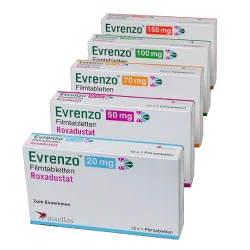
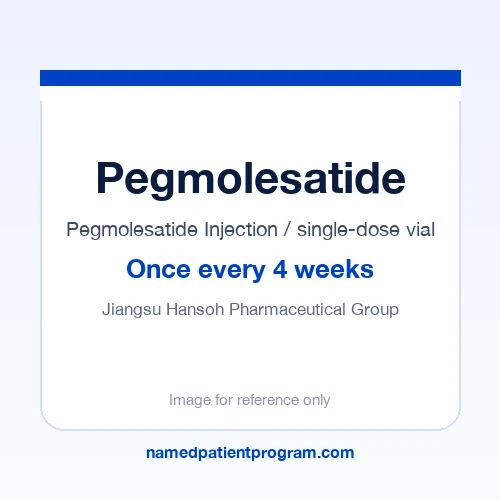
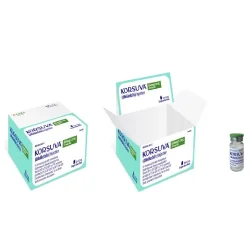
The medicines on this page fall into two groups. The first group works on the kidney disease itself, aiming to cut protein loss in the urine or slow the fall in eGFR: Filspari and Fabhalta for IgA nephropathy, Filspari for FSGS, Fabhalta for C3 glomerulopathy, Benlysta for lupus nephritis, and Oxlumo and Cystagon for two inherited conditions that damage the kidneys from childhood. The second group treats problems that come with advanced CKD: Evrenzo and Pegmolesatide raise haemoglobin in kidney anaemia, and Korsuva and Anrikefon calm the stubborn itch many people feel on haemodialysis. None of them replaces dialysis, a transplant, or the basic care of blood pressure, sugar and diet that your nephrologist plans.
Imported chronic kidney disease medicines by type
All 9 medicines below are prescription-only. Tap a type to filter. Each card opens the full medicine page with dosage, storage and safety details.


Compare all 9 chronic kidney disease medicines
| Medicine | Generic name | Chronic kidney disease type | Form | Approved by |
|---|---|---|---|---|
| Evrenzo | roxadustat | Anaemia of CKD | Tablet | EMA (Europe) |
| Pegmolesatide | pegmolesatide | Anaemia of CKD | Injection (once a month) | China NMPA |
| Korsuva | difelikefalin | Dialysis itch | IV injection after dialysis | US FDA |
| Anrikefon | anrikefon | Dialysis itch | Injection | China NMPA |
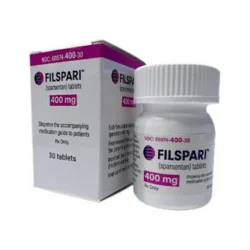
| Filspari | sparsentan | IgA nephropathy, FSGS | Tablet | US FDA |
| Fabhalta | iptacopan | IgA nephropathy, C3G | Capsule | US FDA |
| Benlysta | belimumab | Lupus nephritis | IV infusion or injection under the skin | US FDA |
| Oxlumo | lumasiran | Inherited kidney disease | Injection under the skin | US FDA |
| Cystagon | cysteamine bitartrate | Inherited kidney disease | Capsule | US FDA |
Reports your nephrologist will ask for
Each approval below is tied to a specific diagnosis or treatment situation, so these papers usually come before a prescription is written.
| Report | What it shows the doctor | Related medicines |
|---|---|---|
| Kidney biopsy report | Confirms IgA nephropathy, FSGS, C3 glomerulopathy or the class of lupus nephritis | Filspari, Fabhalta, Benlysta |
| Urine protein (UPCR or 24-hour protein) and eGFR trend | Shows the risk of the kidney disease getting worse, and later whether the medicine is working | Filspari, Fabhalta, Benlysta |
| Haemoglobin, iron studies and current anaemia treatment | Pegmolesatide's China approval depends on dialysis status and on earlier erythropoietin use | Evrenzo, Pegmolesatide |
| Dialysis type and itch score | Korsuva is for adults on haemodialysis and has not been studied in peritoneal dialysis | Korsuva, Anrikefon |
| Liver tests (Filspari) and vaccination record (Fabhalta) | Filspari needs regular liver checks; Fabhalta needs vaccines against certain bacteria at least 2 weeks before the first dose, unless the doctor decides waiting is riskier | Filspari, Fabhalta |
| Genetic test or urine and plasma oxalate, white-cell cystine level | Confirms primary hyperoxaluria type 1 or nephropathic cystinosis | Oxlumo, Cystagon |
Paperwork, getting the medicine to the dialysis unit, and cost
An imported medicine like these is allowed in for one named patient only. The patient is the one who applies, on Form 12A, which our pharmacist fills in from the prescription, and the patient receives a Form 12B permit from CDSCO; the paperwork checklist is in our Form 12A and 12B guide. Korsuva is injected into the dialysis line at the end of each haemodialysis session, Anrikefon is also given by the dialysis team, and Benlysta is often given as a drip, so these can go straight to the treating hospital through our hospital delivery service.
Kidney medicines are usually long-term, sometimes lifelong. To find help with the bills, see our patient support and access programs, which covers company assistance, state and central health schemes, and charitable trusts.
How to get these chronic kidney disease medicines in India
Prescription
Your doctor prescribes the medicine.
Share documents
Send the prescription and latest reports through Online Order.
Import paperwork
Our team checks the source and the import permissions.
Delivery
Delivered with the right storage, including cold chain.
Read How to Order and Indian import regulations. We also serve patients in Delhi NCR, Bangalore, Chennai, Mumbai, Kolkata, Hyderabad and Pune.
Has your doctor prescribed one of these medicines?
Share the prescription and we will guide you on availability and next steps.
Read more about chronic kidney disease
References
- GBD Chronic Kidney Disease Collaboration. Global, regional, and national burden of chronic kidney disease, 1990-2017: a systematic analysis for the Global Burden of Disease Study 2017. Lancet. 2020;395(10225):709-733 (Table 2, India). https://pubmed.ncbi.nlm.nih.gov/32061315/
- Singh AK et al. Epidemiology and risk factors of chronic kidney disease in India – results from the SEEK study. BMC Nephrol. 2013;14:114. https://pubmed.ncbi.nlm.nih.gov/23714169/
- Rajapurkar MM et al. What do we know about chronic kidney disease in India: first report of the Indian CKD registry. BMC Nephrol. 2012;13:10. https://pubmed.ncbi.nlm.nih.gov/22390203/
- Mittal P et al. Spectrum of biopsy-proven renal disease in northern India: a single-centre study. Nephrology (Carlton). 2020;25(1):55-62. https://pubmed.ncbi.nlm.nih.gov/30834630/
- Biswas D et al. Presentation and outcome of pediatric lupus nephritis from a large single centre contemporary cohort in Eastern India. Lupus. 2023;32(12):1440-1446. https://pubmed.ncbi.nlm.nih.gov/37707867/
- National Kidney Foundation. Stages of chronic kidney disease (CKD). https://www.kidney.org/kidney-topics/stages-chronic-kidney-disease-ckd
- US FDA prescribing information for each US-approved medicine (DailyMed). https://dailymed.nlm.nih.gov/dailymed/
This page gives general information only and does not replace medical advice. All medicines listed are prescription-only and must be used under a qualified doctor.